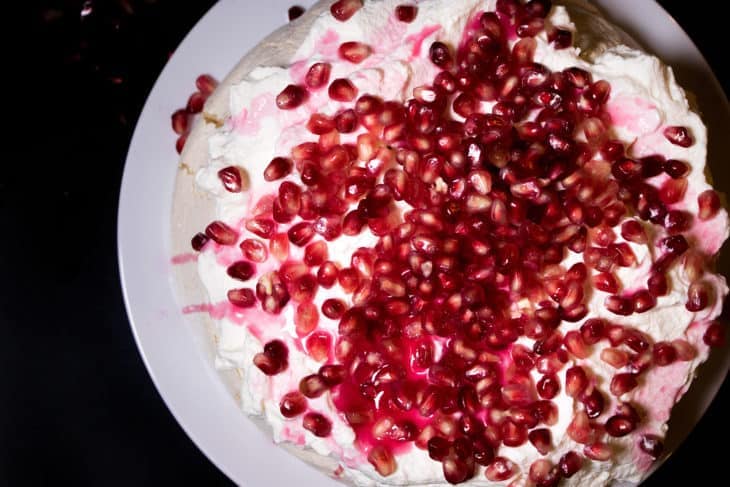
I’m gonna go ahead and make a bold statement: Pavlova may just be the best non-chocolate dessert. Its intense vanilla flavor, slightly crisp exterior and marshmallowy soft inside is the perfect combo. And, because it’s mainly meringue, it seems like a super light dessert, which is why I always help myself to more than one serving. (full disclosure: it’s covered with whipped cream and filled with sugar, but you’re only eating once in a while so you might as well enjoy it)
I originally saw a recipe for pavlova made by Nigella Lawson on tv when I was a teenager. I’d never heard of it before that, but apparently it’s pretty major in Australia and New Zealand. According to Wikipedia it’s unclear which country it was originally created in, but it was first made in the 1920s and named after ballerina Anna Pavlova. And, after I saw it made for the first time, I was mesmerized. Soft meringue. Whipped Cream. And the best part, it was topped with tons of passion fruit. MY FAVORITE.
I typically can’t find passion fruit here in Philly, occasionally they’ll have them at Whole Foods for $3 each, not the most reasonable option when you could easily use 10 to top a full sized pav. So, the next best thing is any flavorful and slightly tart fruit. Pomegranates obviously work, hence the reason why I used them in this version, but strawberries, blackberries, currants, raspberries or even blood oranges work really well. Just get something that’s in season.


Full disclosure: it's covered with whipped cream and filled with sugar, but you're only it eating once in a while so you might as well enjoy it.

Why Pomegranate Is Perfect for Pavlova
While pavlova is sweet and fluffy, pomegranates add a bright, tart contrast that cuts through the richness. They also look stunning—like edible rubies scattered over that soft whipped cream.
It’s also a great dessert for the holidays, especially Christmas or New Year’s, since pomegranates are in season and a jewel-toned dessert feels extra celebratory.

Tips for Making the Best Pavlova
Making meringue feels fussy, but I promise—once you get the hang of it, it’s actually pretty straighforward. Here are a few tips to make it foolproof:
- Use room temp egg whites: They whip up much easier. You can even use thawed frozen whites—I always save the leftovers from recipes that use just yolks.
- Avoid oil or grease: Any residue in the bowl can stop the whites from whipping properly. Make sure your bowl and beaters are squeaky clean. If you want a little extra assurance, rub the inside of the bowl with the cut half of a lemon to really remove any residual oils. Plus, the little bit of added acid with help stabilize those egg whites.
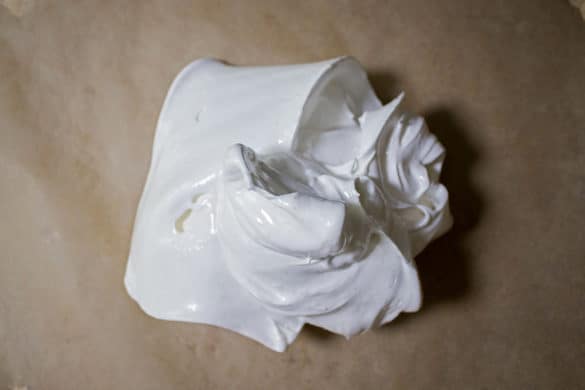
- Don’t overwhip: Stop when the meringue is glossy and forming stiff peaks. Any further, and it might get dry, split or collapse.
- Use cornstarch and vinegar: They stabilize the meringue and help give it that soft, marshmallowy middle.
- Let it cool in the oven: After baking, turn the oven off and don’t open the door. The long, and very slow cool-down is key for structure and getting that perfect texture.
- Use a Stand Mixed: If you’ve got a stand mixer or hand mixer, definitely use it. I’ve made meringue by hand before (because I’m stubborn) and yes—it’s possible. But I would absolutely NOT recommend it.


Vanilla Extract vs Vanilla Bean
You can use either for this recipe. I usually use vanilla extract, but I happened to have a vanilla bean on hand this time, and it adds those gorgeous specks and lots of intense vanilla flavor.
Tip: save the scraped vanilla pod and toss it into your sugar jar. Now you have vanilla sugar, and it goes quite nice in your morning coffee.

Ingredients You Need to Make This Pavlova
The Meringue
- 4 egg whites (room temperature)
- Pinch of salt
- 1 1/4 cups sugar – You want white granulated sugar for this recipe.
- 2 tsp cornstarch – You can substitute in potato starch as well. You need some starch added in to help create that marshmallow interior once it’s baked.
- 1 tsp vinegar (white distilled) – You need some acid to help stabilize the egg whites.
- 1/2 vanilla bean or 1/2 tsp vanilla extract
The Toppings
- Seeds from 2 pomegranates
- 1 cup heavy cream (cold)

How to Make It
- Preheat Oven
Preheat the oven to 350°F. Line a baking sheet with parchment paper. - Whip Egg Whites
Whip the egg whites with a pinch of salt until soft, foamy peaks form. If using vanilla bean, add it now to distribute evenly. - Add in Sugar
Gradually add the sugar, 1/4 cup at a time, whipping continuously until the meringue is glossy and stiff peaks form. - Add Cornstarch and Vinegar
Sift in the cornstarch, then add the vinegar and vanilla extract (if using). Gently fold everything together—don’t deflate the meringue! - Shape the Pavlova
Dab a little meringue under each parchment corner so it doesn’t slide. Spoon the meringue into an 8” circle. It doesn’t need to be perfect—the irregular edges are part of the charm. - Bake it
Immediately place your pavlova in the oven and reduce the temp to 300°F. Bake for 1 hour, then turn the oven off and let the pavlova cool inside the oven without opening the door. This can take several hours (I leave mine in for 5). - Top it up!
Whip the cream until soft peaks form. Pile it on top of your cooled pavlova and finish with a generous scattering of pomegranate seeds.

How to Store Pavlova
Honestly, pavlova is best eaten right away. The meringue softens quickly after you add the cream and fruit. If you need to prep in advance, bake the meringue base the night before and store it in a dry, airtight container. Assemble just before serving.
Store any leftovers in the fridge and an airtight container. The meringue will soften, but it will still be very, very delicious.

Pavlova FAQs
What is pavlova?
It’s a dessert made from whipped egg whites and sugar, thats gets baked until crisp on the outside and soft inside. It’s usually topped with whipped cream and fresh fruit.
Can I use other fruit instead of pomegranate?
Absolutely. Try strawberries, raspberries, blackberries, passion fruit, or citrus like blood orange.
Can pavlova be made ahead?
Yes—bake the meringue in advance and store it in a dry place. Add your toppings just before serving.

More Dessert Recipes to Try
Pavlova with Balsamic Strawberries – Light vanilla pavlova topped with whipped cream and balsamic macerated strawberries—this summer dessert is crisp, creamy, and full of flavor.
Persimmon Pavlova – This light and airy persimmon pavlova features a crisp vanilla meringue, soft whipped cream, and fresh fruit like raspberries and blueberries. A stunning dessert for any occasion!
Glazed Strawberry Jam Donut Focaccia – A no-knead sweet focaccia with strawberry jam and a vanilla glaze. Everything you love about a jelly donut, but as focaccia.
Poires Belle Hélène – Delicious poached pears covered in a salted dark chocolate sauce, toasted almonds, flaky salt, and served with vanilla ice cream.
Rhubarb Crumble – An easy recipe for rhubarb crumble. Tart, delicious rhubarb gets topped with a sweet, buttery crumble topping. So good!
Struffoli – Orange-scented fried dough balls covered in honey, topped with toasted pine nuts and colorful sprinkles. The classic Italian holiday dessert from my childhood.
Blueberry Pie – A classic, easy blueberry pie recipe. It’s simple, perfect, and the peak of summer—and can even be made with frozen blueberries.

Did you make this Pomegranate Pavlova with Whipped Cream and Vanilla Meringue?
Leave a rating and comment below—or tag @TheMostHungry on Instagram.
Pomegranate Pavlova
Equipment
- Stand Mixer or Hand Mixer
Ingredients
The Meringue
- 4 egg whites room temperature
- 1 pinch salt
- 1 1/4 C sugar
- 2 tsp cornstarch
- 1 tsp vinegar white wine, rice or distilled
- 1/2 vanilla bean seeds or 1/2 tsp vanilla extract
Toppings
- 2 2 pomegranates seeds
- 1 C heavy cream
Instructions
- Preheat your oven to 350°F.
- Whip the egg whites with a small pinch of salt until they’re white and foamy. If you’re using vanilla beans, add them in now, that way they can get evenly dispersed throughout the meringue.
- Slowly add in the sugar, 1/4 cup at a time and keep whipping until you see that the meringue is super shiny and it’s forming stiff peaks. Ok, you’re done with the mixer for now.
- Next, sift over the cornstarch, add the vinegar and if you’re using vanilla extract add it in now. Fold everything so it’s combined, and be gentle, you don’t want to deflate those beautiful egg whites you created!
- Line a baking sheet with parchment paper. I put a tiny dab of the meringue under the corners of the parchment so it sticks to the baking tray and doesn’t slide all around while I mound the meringue on top and form it into a circle. You’re aiming for a diameter of around 8” here, but it doesn’t need to be perfect, and I think it looks better when it’s not perfect. You can trace a circle on the underside of the parchment paper if you prefer to have a bit of a guide for your meringue sculpture. Just make sure its on the underside of the paper, the pencil or pen will transfer to the meringue as it cooks. No good.
- Then, place that meringue in the oven right away and lower the temp to 300°F as soon as you close the door. Let the pav bake for 1 hour, keeping the door closed, turn the oven off and let the pavlova cool in the oven. This can take a while, especially if your oven is very well insulated. I left mine in there for about 5 hours, the oven was still slightly warm, but 5 hours did the trick. The warmer temp at the beginning helps to give the pavlova the crispy outside and the long, low cooking and cooling is what will give you that soft marshmallowy center. It takes a while, but I promise it will be worth it.
- Once your pav is finished baking, go ahead and whip up some heavy cream, make sure it’s very cold before you start whipping. Then mound in on top of the pav and top with your fruit of choice. This most likely will get eaten up right away which is a good thing since it really isn’t a dessert that keeps well. Enjoy!
Notes
Did You Make This Recipe?
Leave a comment with your thoughts or share your version on Instagram by tagging @TheMostHungry. I’d love to see how you made it your own!

Want more recipes like this delivered right to your inbox?
Sign-up to the Substack newsletter below:
Subscribe
Hi, I'm Rachel — the cook, photographer, and recipe developer behind Most Hungry.
This is my go-to spot for bold, approachable recipes rooted in Italian and Italian-American cooking, from hand-rolled fresh pasta to fall-off-the-bone ribs. Great food should be fun, doable, and absolutely delicious. Learn more about me →