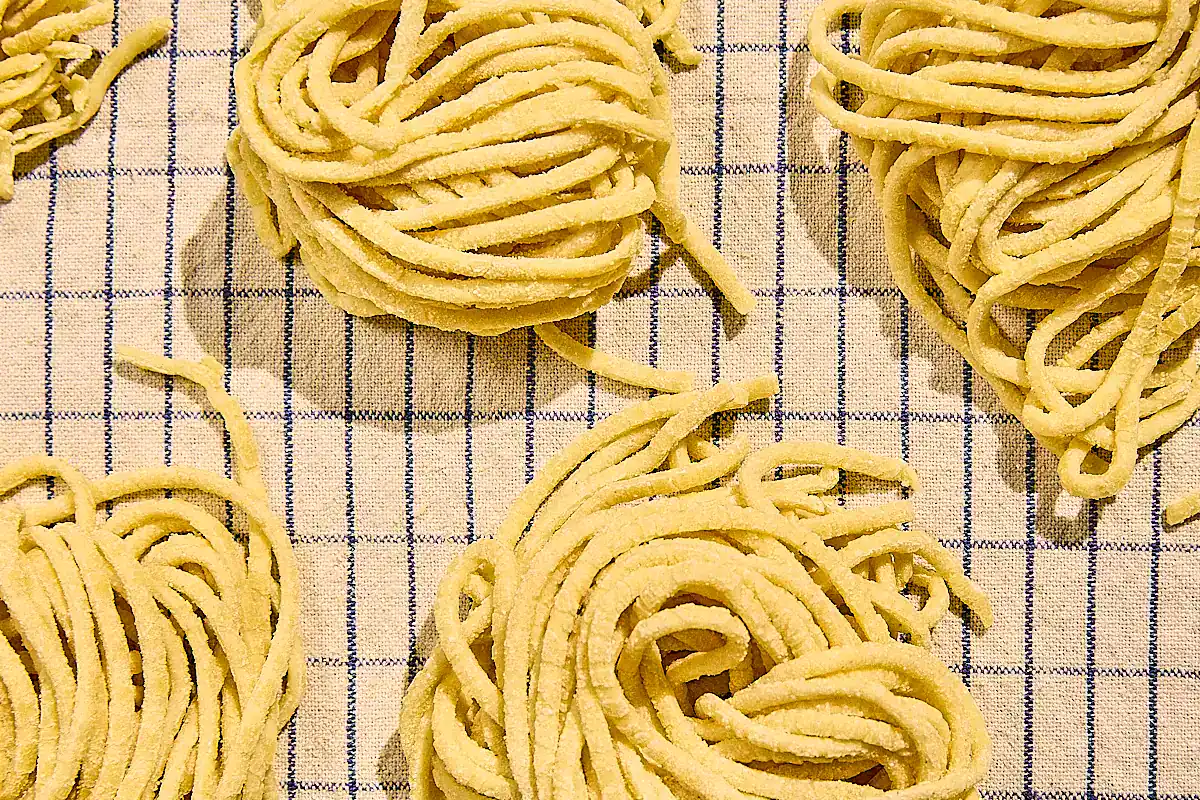
Bigoli is one of those pasta shapes that doesn’t get nearly enough attention. Typical of Veneto and eastern Lombardy,¹ this pasta is like a thick spaghetti with a rough, textured exterior that holds onto whatever sauce you pair it with. It’s traditionally made with a special press called a bigolaro, but you can get excellent results at home using a pasta machine with a roller attachment and a good semolina dough.
This is the bigoli post I teased over on my semolina pasta dough recipe. Onto the recipe…
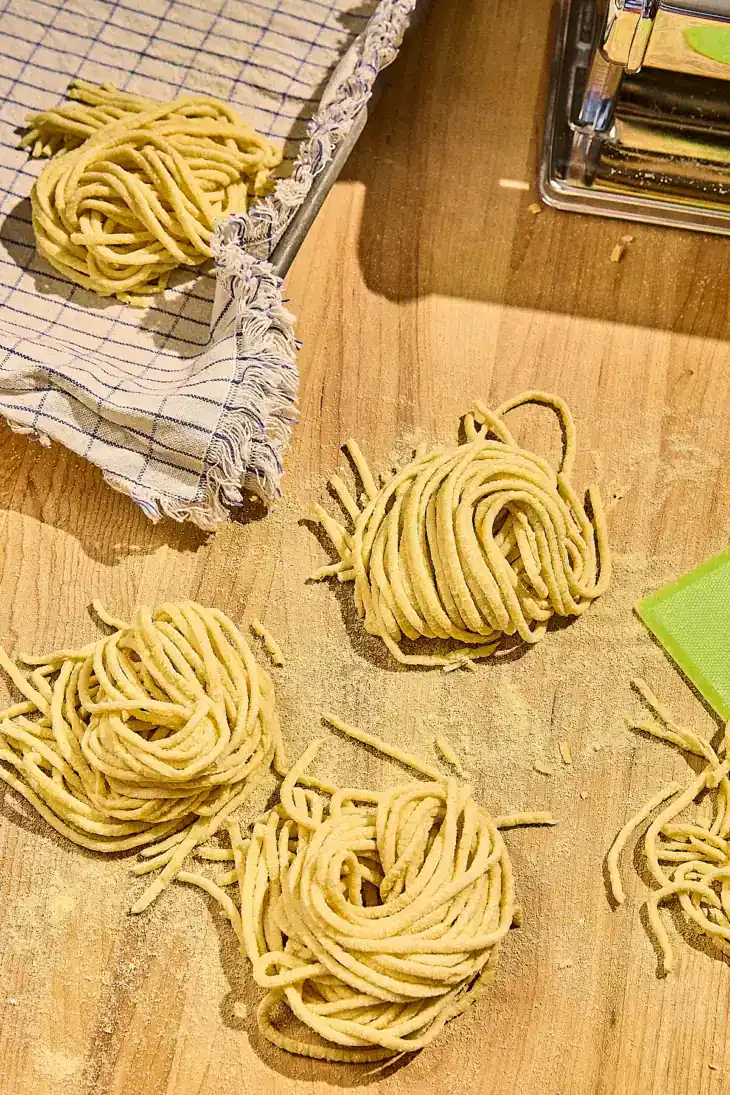
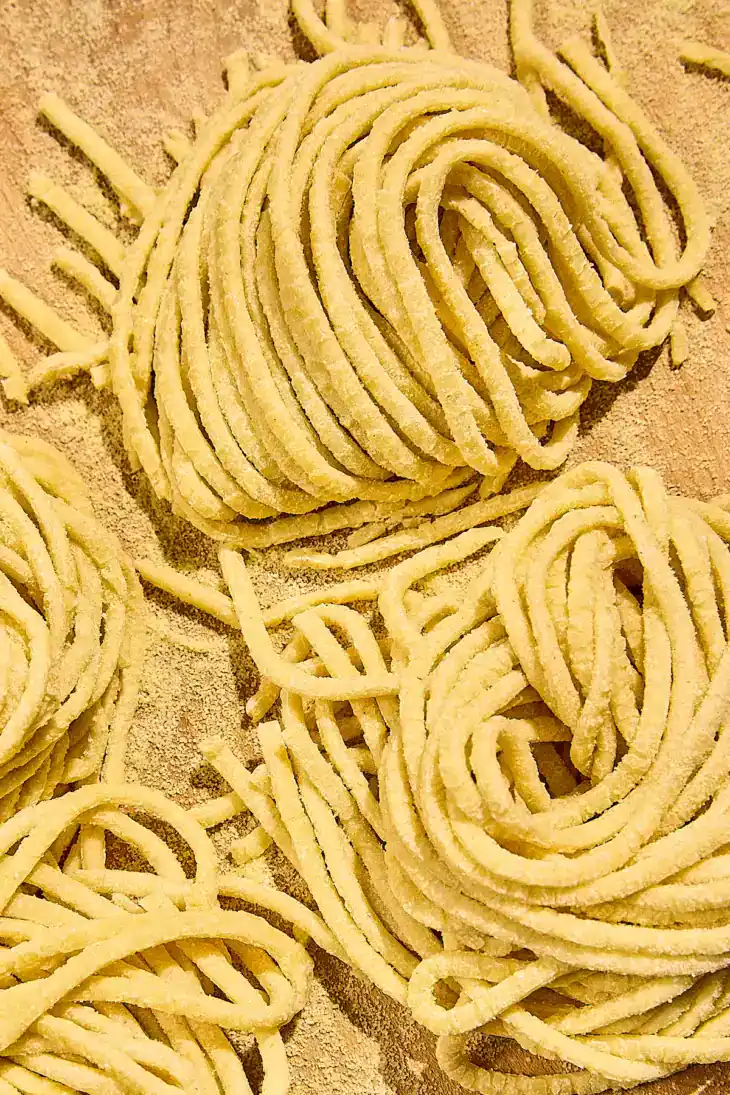
This pasta is like a thick spaghetti with a wonderfully rough exterior that holds onto whatever sauce you pair it with.

What is Bigoli?
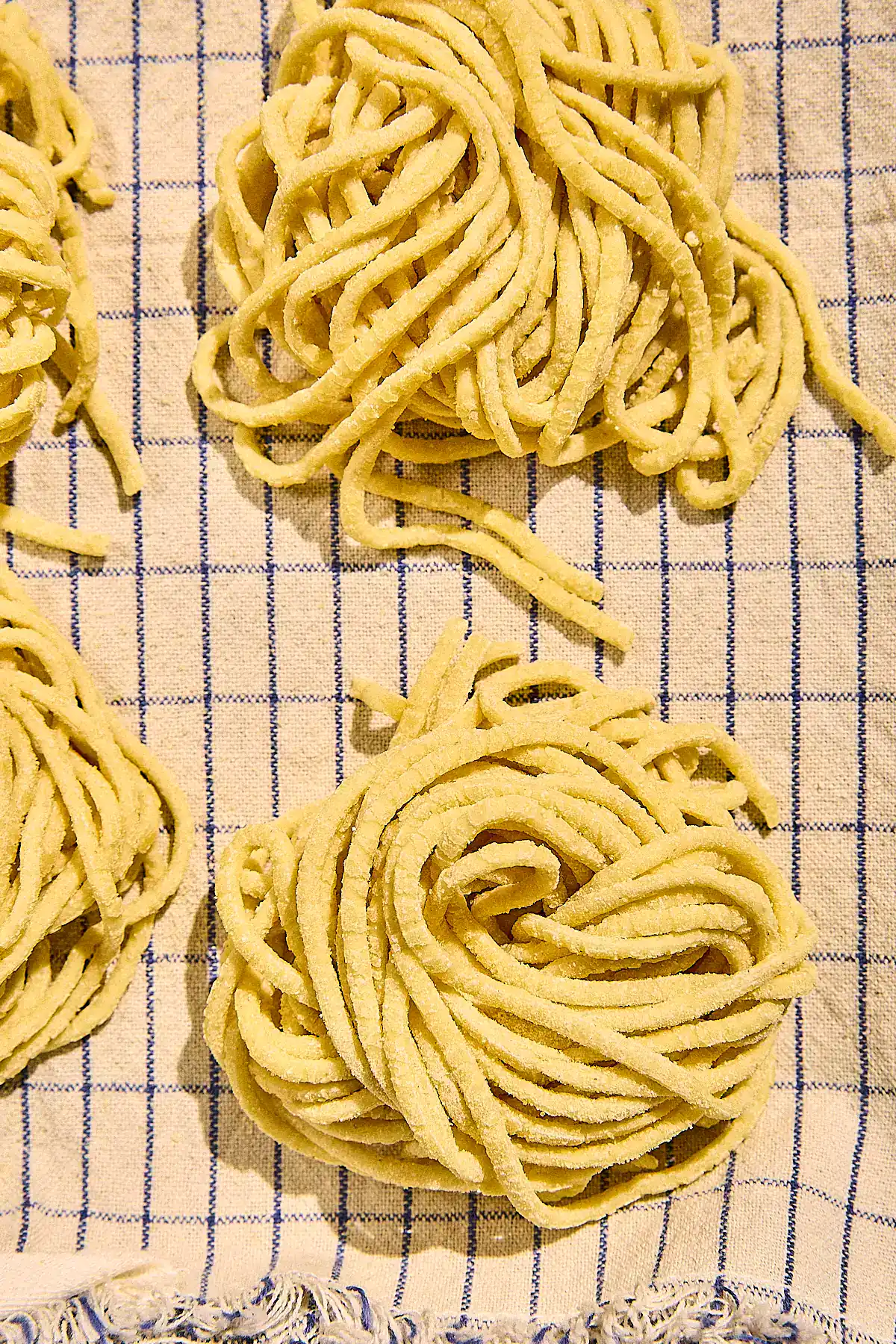
Bigoli is like thick spaghetti or bucatini, just without the hole in the middle — and it tends to have more texture on the outside, all thanks to the traditional method of extruding the pasta through a bigolaro.
It’s a classic pasta from the Veneto region of northeastern Italy. Traditionally, bigoli can be made with whole wheat flour and sometimes eggs (either chicken or duck). For this version, I’m making bigoli with semolina and water. The semolina dough gives the bigoli a wonderful texture and bite. I’m also sad to say, I don’t have a bigolaro, but I do have a bigoli attachment for my pasta machine that works great. The key to getting the right texture on the pasta is making sure your dough isn’t too wet, and that you let it dry long enough to develop a nice craggly surface before rolling it through the bigoli attachment.
The most classic sauce for bigoli is a seemingly simple combination of slow-cooked onions and anchovies — the classic dish, bigoli in salsa (coming soon!). But you could certainly pair it with any sauce you like: pesto, a simple cherry tomato sauce, or even a ragù.
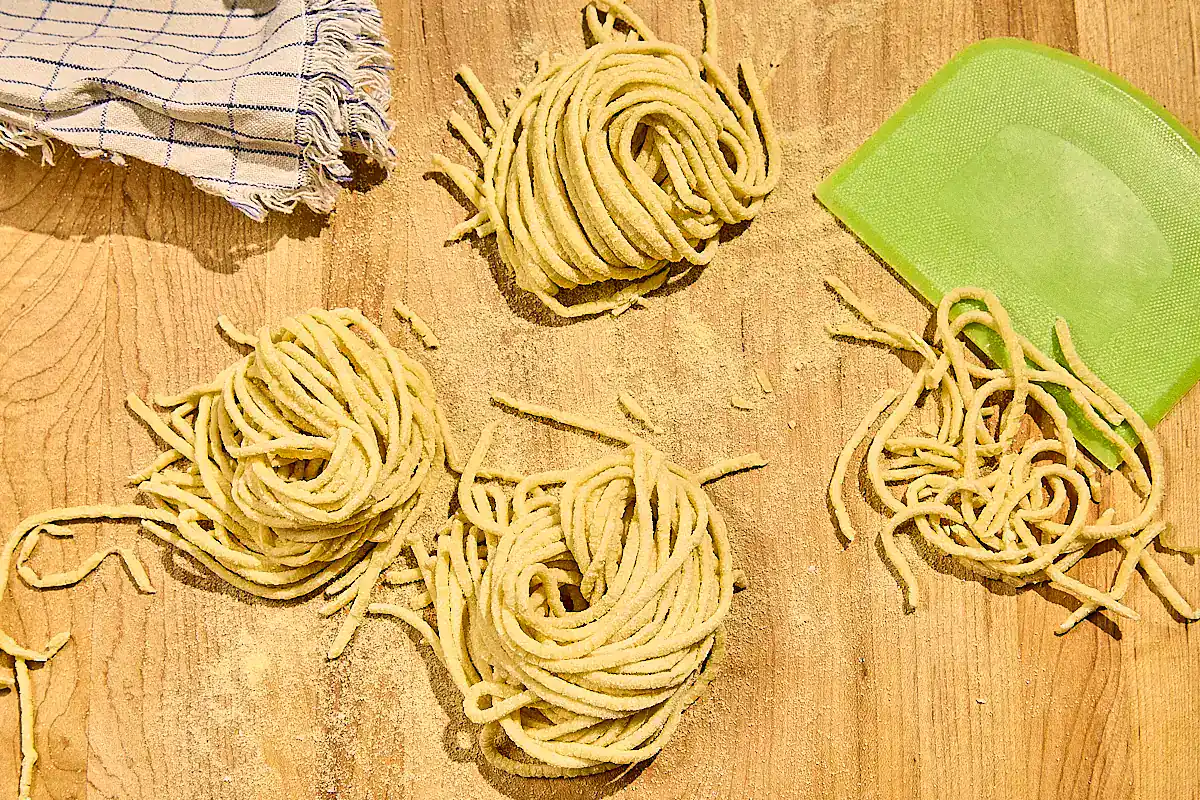
How to Make Semolina Bigoli with a Pasta Machine
Traditionally, bigoli is made with a bronze die pasta press and a whole wheat pasta dough — and if you have a bigolaro, by all means, use it! But for a home cook, like me, who already has a pasta machine and a batch of semolina dough? This method works perfectly.
I like to use my semolina pasta dough as the base. The semolina gives you a pasta with a nice chew — the thick strands hold their shape and cook up with that satisfying, al dente bite. And the pasta machine’s bigoli attachment controls the thickness, so you get nice, consistently shaped strands.
Is this identical to traditional bigoli? No. But it’s still pretty delicious and absolutely doable at home.
What You’ll Need
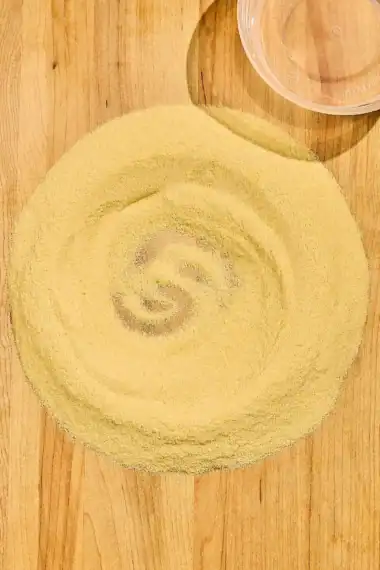
- 1 batch semolina pasta dough (400g semolina flour, 200g water, 1g salt — makes 4 servings)
- Pasta machine with a bigoli attachment — I use the Marcato Atlas 150 with the Marcato Bigoli attachment.
- Sheet pan dusted with semolina or lined with a kitchen towel
How to Make Bigoli
- Make the dough
Prep one batch of semolina pasta dough. Knead for 8–10 minutes until smooth, then rest covered for 20 minutes. Full instructions here. - Divide the dough
Divide the rested dough into 4 equal pieces. Keep the pieces you’re not working with covered so they don’t dry out. - Roll through the pasta machine
Working with one piece at a time, roll the dough through your pasta machine starting at the widest setting (setting 1). Roll it through a few times, folding it over itself once or twice to develop some structure. Set the sheet aside to dry slightly on a kitchen towel or a wooden surface dusted with semolina to prevent sticking. Let the dough dry out for about 20 minutes or so. Continue to roll out your remaining portions of dough. You want the outside of the dough to dry a bit so that when you roll it through setting 2, the pasta develops that wonderful craggy texture that will hold onto your sauce. - Shape the bigoli
Roll your sheets of dough through the machine on setting 2. The surface should look textured — that’s exactly what you want.
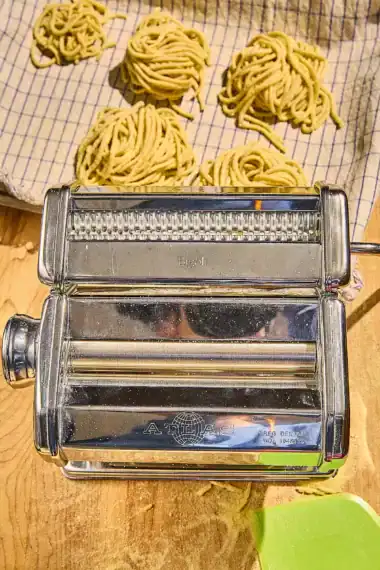
Then, with your bigoli attachment on the machine, roll each sheet through to shape the pasta. Dust with semolina to keep the strands from sticking, and let them dry on a towel-lined sheet tray or a sheet pan dusted with semolina. - Cook
Bring a large pot of water to a boil and season generously with salt. Cook the bigoli for about 3–5 minutes, checking for doneness as the cooking time will vary. You want them cooked through but with a firm, chewy bite. They’ll finish cooking in your sauce, so pull them just before fully done. - To store
If you’re not planning on eating your bigoli the day you make them, I recommend freezing. Wrap the pasta into small nests and freeze on a sheet tray. Once solid, transfer to a plastic bag or airtight container and keep frozen until ready to use. Cook straight from frozen, adding an extra minute or two to the cooking time.
Tips for the Best Homemade Bigoli
- Use semolina, not all-purpose flour, for dusting. The slightly coarser texture of semolina keeps the strands separated without making the dough gummy.
- Salt your water well. Semolina pasta can handle — and benefits from — a well-seasoned pot of water. Don’t be shy.
- Finish in your sauce. Pull your bigoli out of the water 30–60 seconds before they’re fully cooked and finish everything together in the pan with your sauce and a splash of pasta water. The starch in the cooking water helps everything come together.
What Sauce to Serve with Bigoli
Bigoli’s thick, rough texture pairs perfectly with bold, clinging sauces. Here are some of my favorites:
Bigoli in Salsa (Anchovies and Onions) — coming soon! The classic. Thinly sliced onions slowly cooked in olive oil until jammy, then anchovies melted in until they dissolve into a savory, almost sweet sauce. Deceptively simple and absolutely delicious.
Cherry Tomato Butter Sauce — Simple, silky, and so good. The butter makes it rich, the cherry tomatoes keep it bright, and bigoli’s chewy strands are a perfect match.
Pasta alla Genovese — A Neapolitan beef and onion ragù slowly simmered with white wine until the onions practically dissolve into the sauce. Rich, savory, and exactly the kind of long, slow-cooked sauce that bigoli was built for.
Short Rib Ragù — If you’re going to put the time into making fresh pasta, you might as well go all the way. This slow-cooked short rib ragù is luxurious, and the thick, toothsome bigoli is a great match.
Caramelized Onion Pasta — Slightly sweet, jammy fried onions tossed with pasta and a generous handful of freshly grated parmesan. It’s got the vibe of classic bigoli in salsa, just without the anchovies.
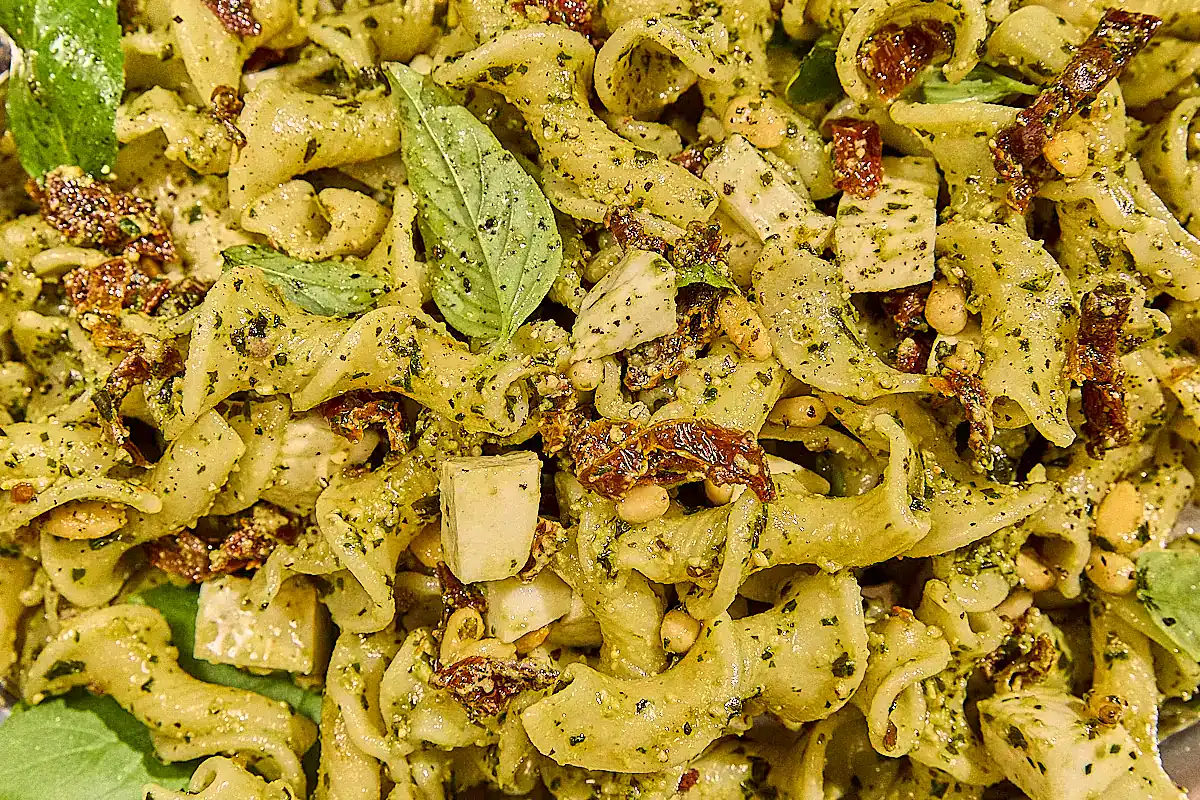
Big Batch Basil Pesto — Fresh, herby, and ready in minutes. Bigoli’s rough surface catches every bit of pesto, which makes this a surprisingly great pairing. Toss with a splash of pasta water to loosen it up and finish with extra parmesan.
Pistachio Pesto — A Sicilian-style pesto with basil, mint, and pistachios that’s a little richer and more complex than the classic. The nuttiness plays off the semolina dough beautifully — love this one!
Pesto Rosso — Sun-dried tomatoes, almonds, parmesan, and garlic make this red pesto savory and slightly sweet. It clings to bigoli’s rough surface beautifully and comes together in under 10 minutes.

Want more recipes like this delivered right to your inbox?
Sign-up to the Substack newsletter below:
Subscribe
Hi, I'm Rachel — the cook, photographer, and recipe developer behind Most Hungry.
This is my go-to spot for bold, approachable recipes rooted in Italian and Italian-American cooking, from hand-rolled fresh pasta to fall-off-the-bone ribs. Great food should be fun, doable, and absolutely delicious. Learn more about me →
Homemade Bigoli Pasta
Equipment
- A pasta machine with a bigoli attachment I use the Marcato Atlas 150 with the Marcato Bigoli attachment.
Ingredients
- 400 g semolina flour durum wheat
- 200 g water
- 1 g salt about 1/4 teaspoon Diamond Crystal kosher salt; use slightly less if using a finer salt
Instructions
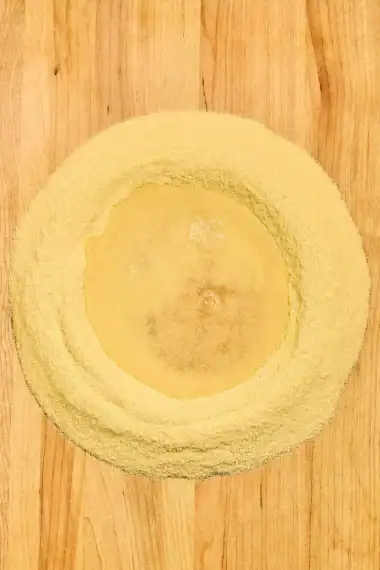
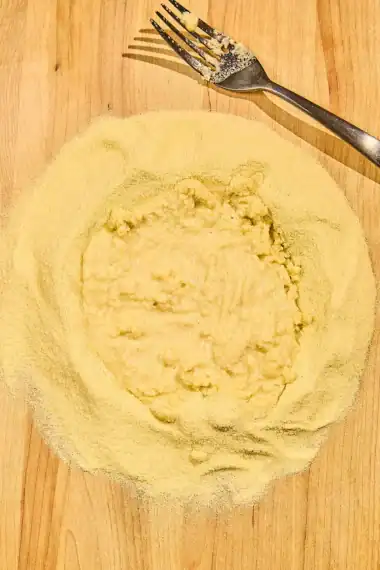
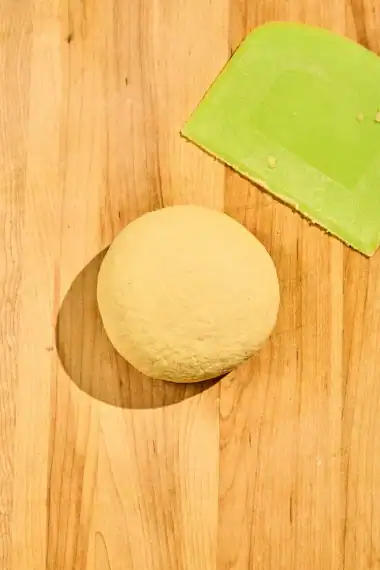
- Prep one batch of semolina pasta dough. Make a mound of flour on your work surface. Use the back of your hand to create a well in the center. Add the salt to the water and stir to dissolve. Pour the water into the well, and slowly mix in the flour until you have a paste, and then go ahead and mix in the rest of the flour. Knead for 8–10 minutes until smooth, then rest covered for 20 minutes.
- Divide the rested dough into 4 equal pieces. Keep the pieces you’re not working with covered so they don’t dry out.
- Working with one piece at a time, roll the dough through your pasta machine starting at the widest setting (setting 1). Roll it through a few times, folding it over itself once or twice to develop some structure. Set the sheet aside to dry slightly on a kitchen towel or a wooden surface dusted with semolina to prevent sticking. Let the dough dry out for about 20 minutes or so. Continue to roll out your remaining portions of dough. You want the outside of the dough to dry a bit so that when you roll it through setting 2, the pasta develops that wonderful craggy texture that will hold onto your sauce.
- Roll your sheets of dough through the machine on setting 2. The surface should look textured — that’s exactly what you want. Then, with your bigoli attachment on the machine, roll each sheet through to shape the pasta. Dust with semolina to keep the strands from sticking, and let them dry on a towel-lined sheet tray or a sheet pan dusted with semolina.
- Bring a large pot of water to a boil and season generously with salt. Cook the bigoli for about 3–5 minutes, checking for doneness as the cooking time will vary. You want them cooked through but with a firm, chewy bite. They’ll finish cooking in your sauce, so pull them just before fully done.
- If you’re not planning on eating your bigoli the day you make them, I recommend freezing. Wrap the pasta into small nests and freeze on a sheet tray. Once solid, transfer to a plastic bag or airtight container and keep frozen until ready to use. Cook straight from frozen, adding an extra minute or two to the cooking time.
Did You Make This Recipe?
Leave a comment with your thoughts or share your version on Instagram by tagging @TheMostHungry. I’d love to see how you made it your own!
Looking for more fresh pasta? Try lorighittas, malloreddus, or homemade orecchiette — all made with the same semolina dough.
Sources and Inspiration
- “Bigoli in Salsa (Bigoli with Anchovies and Onions)” — Italy Magazine
- Bennison, Vicky, Emma Lee (Photographer), and Hardie Grant Books. Pasta Grannies: The Secrets of Italy’s Best Home Cooks. London: Hardie Grant Books, 2019.
- Funke, Evan, Katie Parla, Eric Wolfinger, and Nancy Silverton. American Sfoglino: A Master Class in Handmade Pasta. San Francisco: Chronicle Books, 2019.
- “Bigoli Pasta from Veneto” — The Pasta Project
- “Bigoli: The Original Venetian Recipe” — Accademia di Cucina Italiana
- “Bigoli” — Wikipedia
FAQs
Can I make bigoli without a pasta machine?
Not really. The traditional method uses a bigolaro press, which I don’t have either. For home cooks, a pasta machine with a bigoli attachment is the most consistent and approachable option.
What’s the difference between bigoli and spaghetti?
Bigoli is thicker and has a rougher surface texture than standard spaghetti. It’s closer in thickness to bucatini (just without the hole), with a chewier bite and a more sauce-gripping texture.
Can I use egg dough for bigoli?
Traditionally, yes — Venetian bigoli is sometimes made with chicken or duck eggs. But semolina dough gives you a firmer, chewier result that works very well here. My semolina pasta dough is a great base.
How do I store homemade bigoli?
Fresh-cut bigoli can be dried further (1–2 hours at room temperature) and stored in a nest in the refrigerator for up to 2 days, lightly dusted with semolina. You can also freeze them on a tray until firm, then transfer to a bag or airtight container.
What pasta machine do I need?
I recommend the Marcato Atlas 150 with the Marcato Bigoli attachment.



2 thoughts on Homemade Bigoli Pasta
My Mercato Bigoli attachment came in 4 pieces. The main roller with the bigoli cutter, rubber comb, and two skinny metal rods. Can you tell me how to assemble the bigoli attachment? Or is the attachment broke
Oh, this happened to me! Not broken, but you need to add the combs back to the bottom of the rollers and the two rods hold it in place. I think it gets knocked out of place during shipment. I tried to use it without adding those parts back in (wasn’t sure what they were for at first) and it was a bit of a mess. The black combs get placed on the underside of the rollers, they fit nicely in the grooves, and then you can slide the metal rods in on each side to hold them in place. Once that is in place you can roll out your bigoli and the combs will pull the pasta off the rollers for you. I’ll also email you a pic of what it should look like!