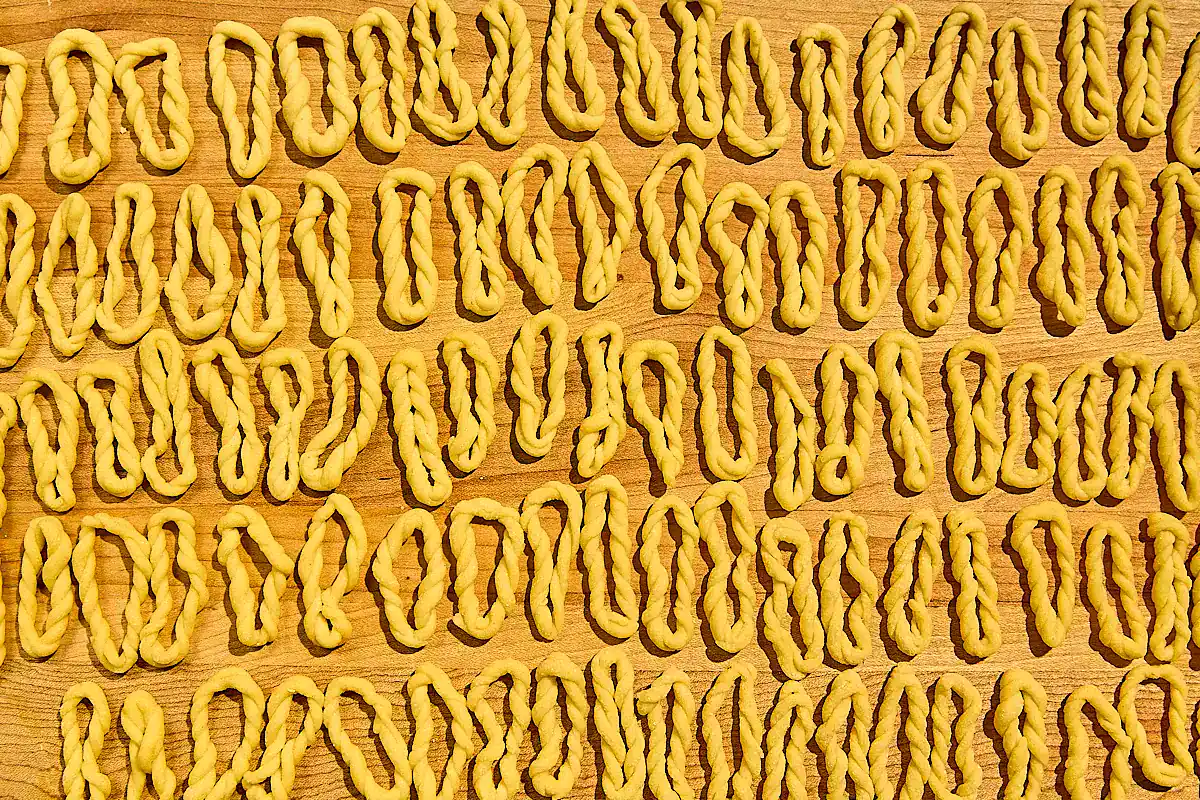
“Morgongiori is a little village on the western side of central Sardinia, and it is the only place on the island — and indeed the whole of Italy — where lorighittas are made.” – Pasta Grannies
So, of course I’m trying my hand at making them—here in Philly.
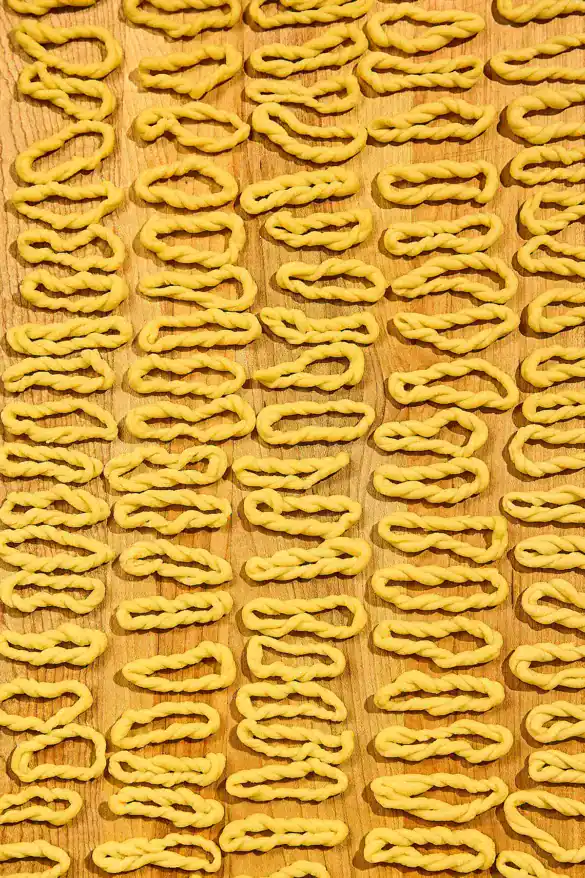
Lorighittas are a pretty distinct pasta shape: two thin loops that get twisted together to create that distinct twisted, ropey, ring shape. They have a nautical feel to them, which makes sense with Sardinia being an island and all. I have not had the pleasure of going to Sardinia (yet!) and having them, but I figure I could take a little kitchen vacation and make them at home. Really trying to manifest a Sardinian vacation over here.
I love making fresh pasta — pici, tagliatelle, cavatelli, agnolotti — the list goes on. Lorighittas, though? I wouldn’t really say they’re beginner-friendly. They’re slow, detailed, and a bit tedious to make. But SO well worth it. Possibly my new favorite. The texture and shape is perfection.
Traditionally, lorighittas are served with a chicken ragù: slow-cooked chicken in a puréed tomato sauce. But, you can sauce them however you’d like: a simple cherry tomato butter sauce, short rib ragù, Genovese sauce, ragù bianco, even brown butter and sage. Not at all the classic choices, but who cares, they’re all delicious.
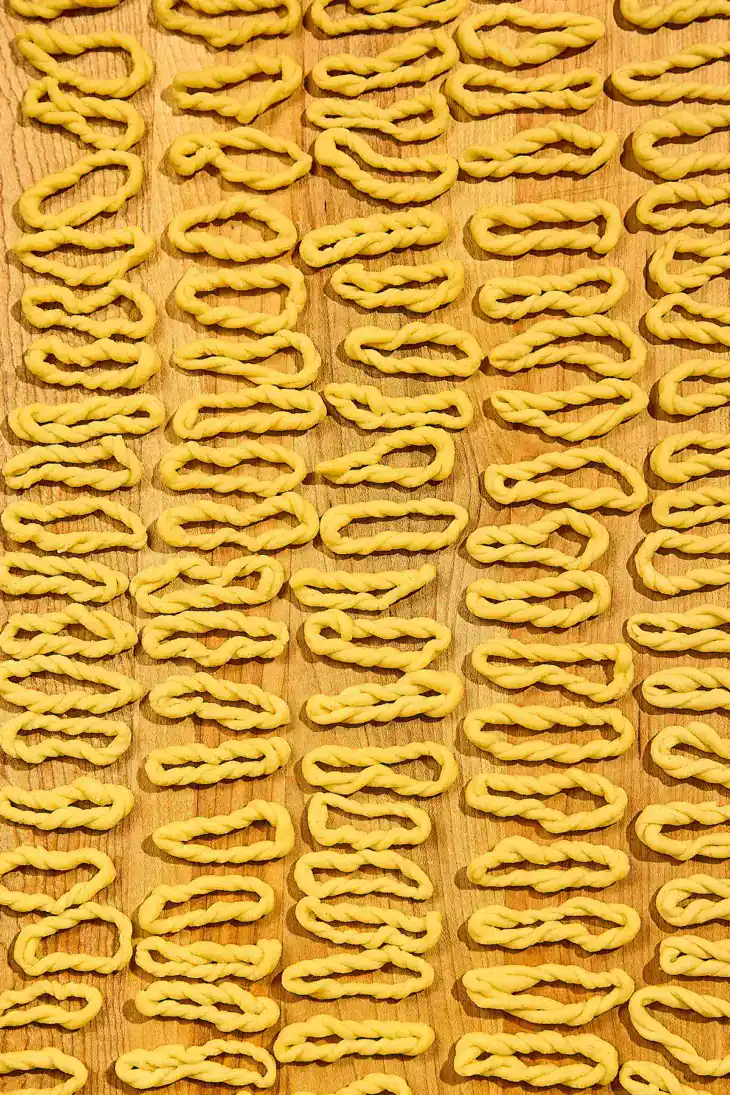
They have a nautical feel to them, which makes sense with Sardinia being a island and all. I have not had the pleasure of going to Sardinia (yet!) and having them, but I figure I could take a little kitchen vacation and make them at home. Really trying to manifesting a Sardinia vacation over here.
What Are Lorighittas?
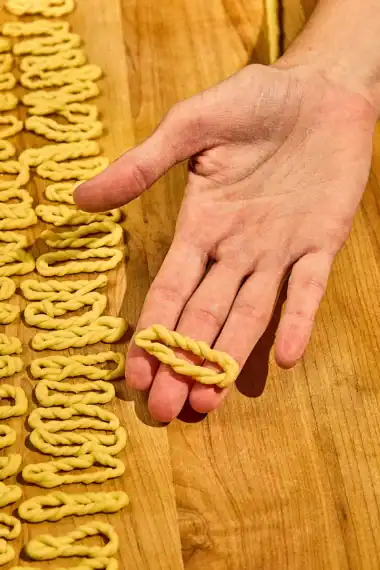
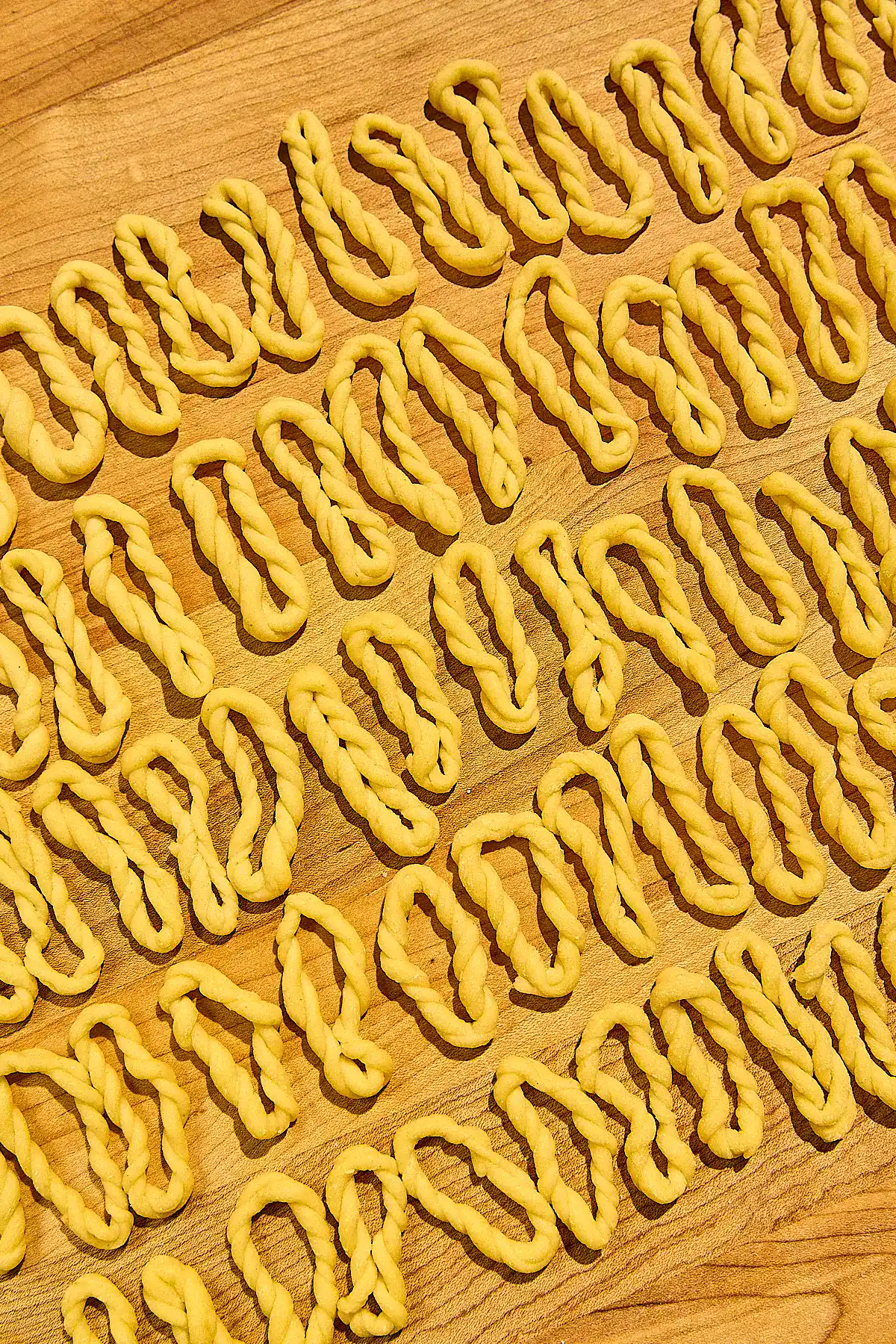
Lorighittas are a traditional pasta from the village of Morgongiori in Sardinia. These pasta rings are made by twisting two strands of thinly rolled semolina dough into a loop, and then forming a kind of twisted rope texture.
They were historically prepared by hand for special occasions like All Saints’ Day since they take a while to make. If you love hand-shaped pasta, this one’s for you. It’s incredibly satisfying to make, and the shape is just beautiful. I mean, look at them!
Ingredients for Lorighittas (Traditional Sardinian Twisted Pasta Rings)
- 300g semolina flour – You want finely ground semolina flour for this. Look for one specifically labeled for pasta, or labeled as semola rimacinata. You don’t want a coarse ground semolina for this.
- 150g warm water
- Pinch of salt (~ 1/4 tsp) – Dissolved in the water. Salt is used to help with the texture of the dough, and will allow you to roll out those thin stands while not breaking. It’s not there for seasoning the pasta.

How to Make Lorighittas (Step-by-Step)
Make The Dough:
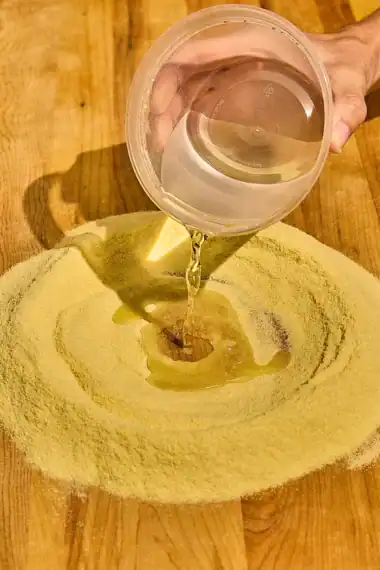
- Add a pinch of salt to your warm water and stir until fully dissolved.
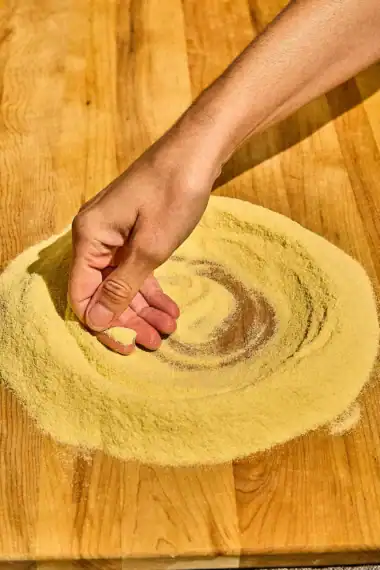
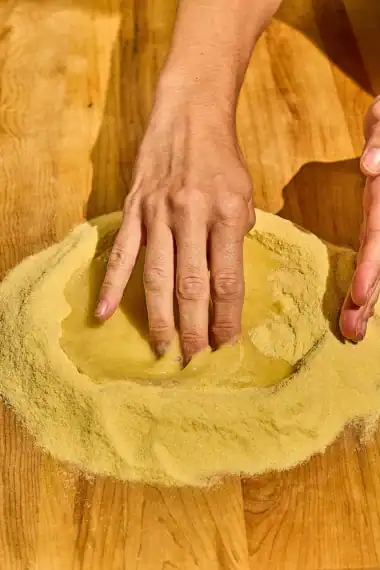
- Pour your semolina onto your work surface and make a well in the center. Slowly pour in the water, and using your fingertips, slowly incorporate it into the flour and form a shaggy dough.
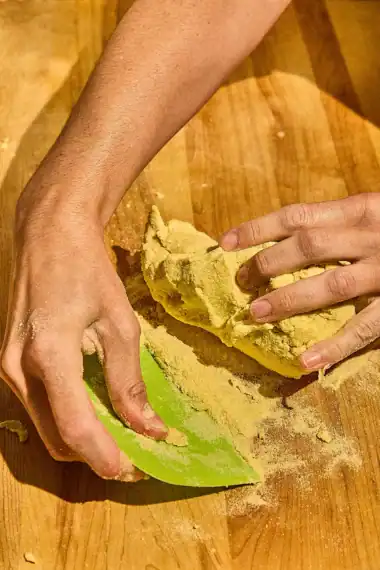
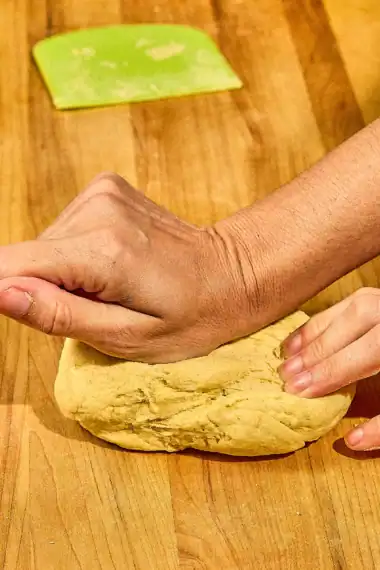
- Bring the dough together into a rough ball and knead for about 5 minutes, or until it’s fairly smooth and everything is fully combined.
- Cover your dough and let it rest for at least 10 minutes. This gives the semolina time to hydrate, which makes it much easier to roll out into very thin strands — crucial for shaping lorighittas.
Shape the Lorighittas:
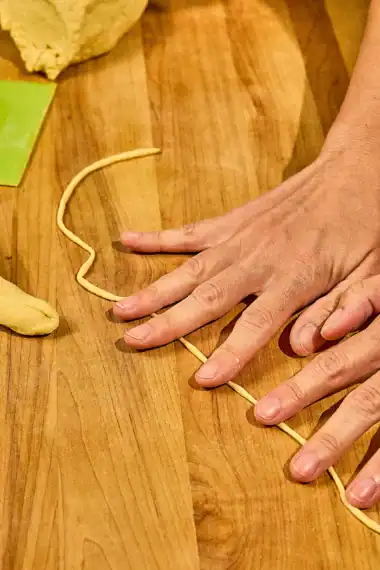
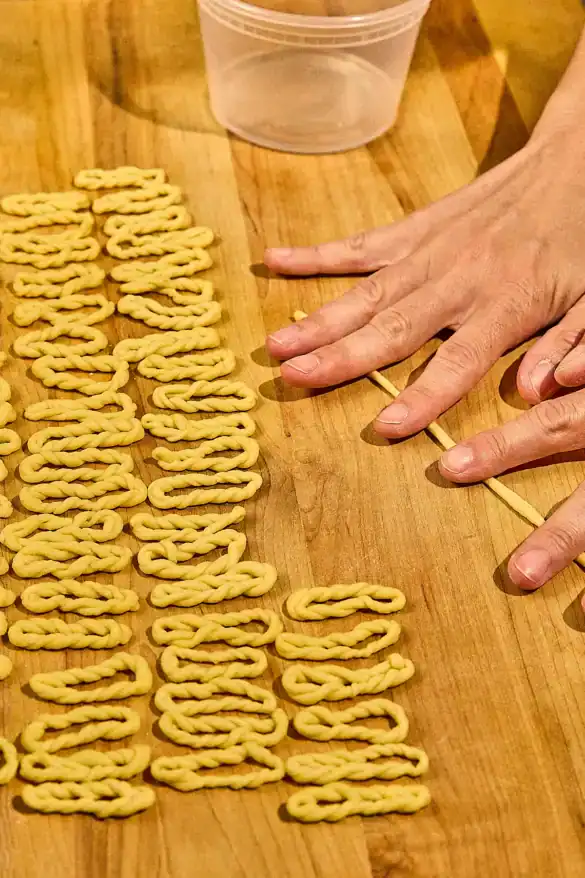
- Tear or cut off a small piece of dough and roll it into a very thin strand — around 1/8” (~3 mm) or even thinner, if you have the patience.
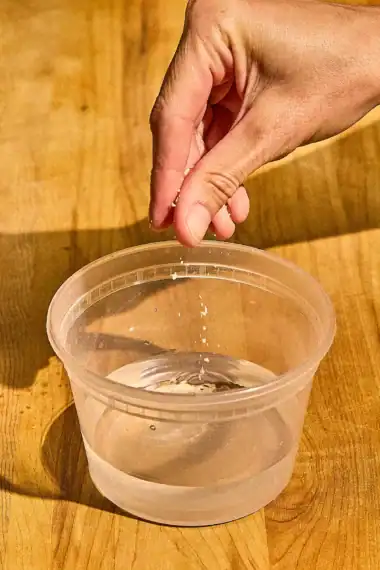
Tip: I keep a small container of water nearby and very, very lightly wet my board before rolling. Just a drop or two, wiped over the surface, helps the dough stick slightly, making it easier to roll without tearing. - Roll the strand to at least 10” long — you’ll need enough to wrap twice around three fingers.
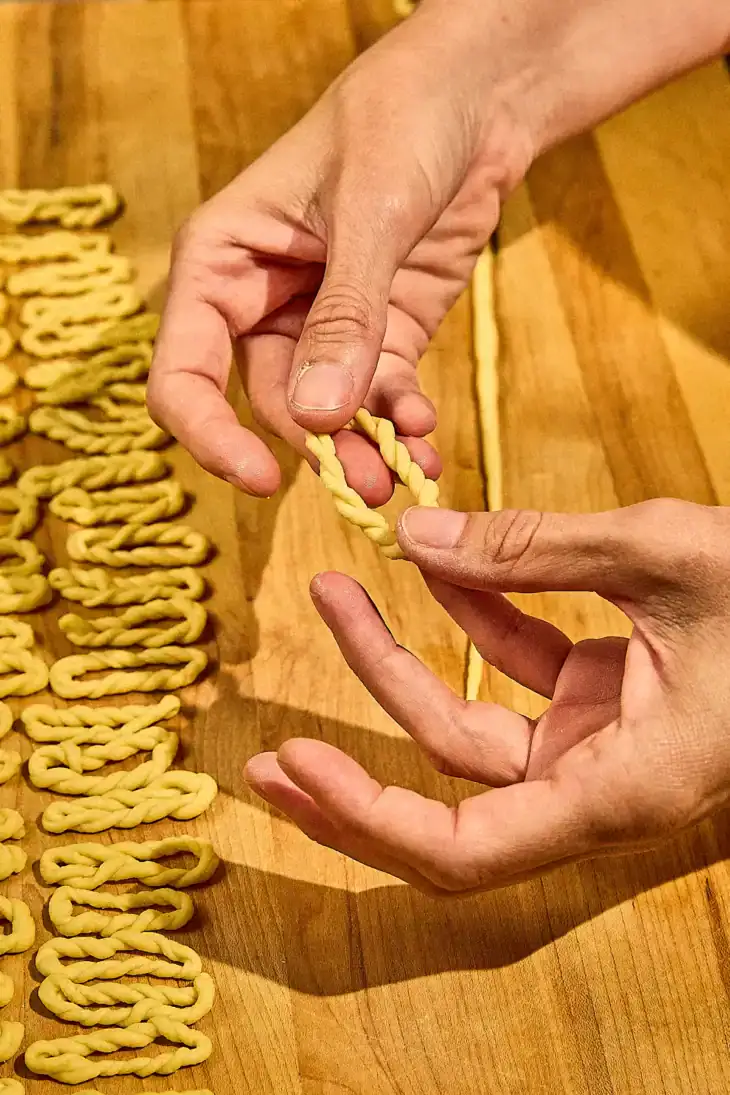
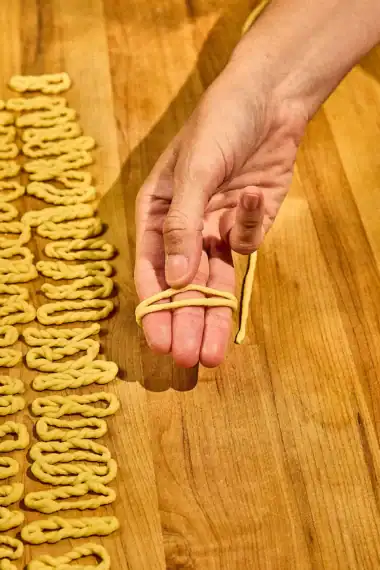
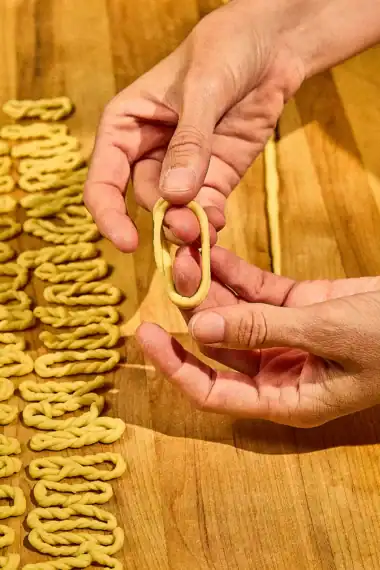
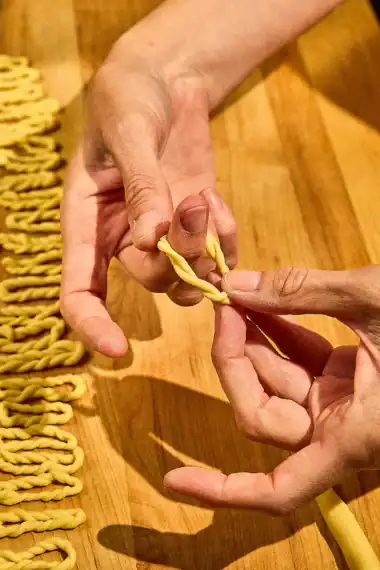
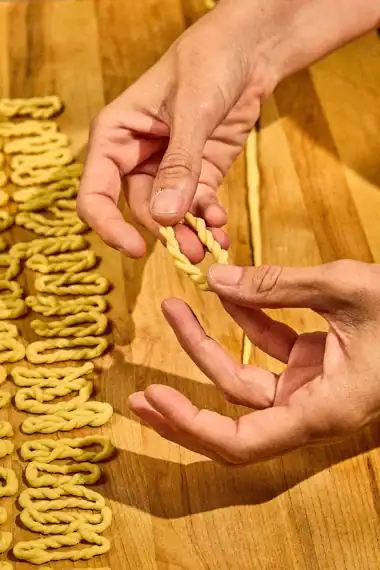
- Wrap the dough around three fingers two times, then pinch and roll the ends together to seal. Carefully twist the looped dough three times to form the signature twisted ring shape.
- Place the shaped lorighittas on your board to dry slightly.
- Repeat with the remaining dough.
Cook the Lorighittas:
- Bring a large pot of salted water to a boil. Add your lorighittas and cook until al dente — anywhere from 8 to 12 minutes. It will really depend on how thin or thick you rolled them. Check for doneness every few minutes.
- Drain, toss with your favorite sauce (I have lots of suggestions below), and top with plenty of grated cheese.
Tips for Shaping Lorighittas
- Let your dough rest. Hydrated dough is much easier to roll into a thin strand, which is what you want for this pasta shape.
- Only pull off a small bit of dough to shape at a time. You need to make sure the dough doesn’t crack or dry as you’re working with it, so only pull off a small protion at a time to work with and keep the rest covered. An inverted bowl over your dough ball works great!
- Use a tiny bit of water, literally a drop or two, spread over you work surface to help roll out those strands and not break.
- Be patient and take your time. This is a slow and detailed pasta shape to make—but it’s SO worth it. Set aside an afternoon, or morning, then roll and shape away.
FAQs
Can I freeze lorighittas?
Yes. Arrange them in a single layer on a baking sheet and freeze until solid. Then transfer to a container or bag for storage. Cook right from frozen, just add a couple extra minutes.
Can I use all-purpose flour?
I wouldn’t recommend it. Semolina is traditional and gives that signature chewy bite and gorgeous color. All-purpose flour won’t have the right texture.
Do I need a pasta machine?
Nope! This is 100% hand-shaped. No machines required. I would recommend a large wooden board to shape them. You can certainly use whatever work surface you have, but the texture of wood is ideal to grip the dough.
Some Sauces to try with your Lorighittas:
Chicken Ragù – This chicken ragù is slowly simmered with tomato, onion, cloves, garlic and dry vermouth (or white wine). Inspired by a classic Sardinian recipe, this slow-cooked chicken sauce is comforting, flavorful and so easy to make.
Cherry Tomato Butter Sauce – A simple, silky tomato sauce made with just a handful of ingredients. Rich from butter, naturally sweet from cherry tomatoes, and perfect for tossing with your favorite pasta.
Ragù Bianco (White Bolognese Sauce) – A delicious tomato-free version of classic Bolognese, this ragù bianco is simmered slowly and made with pancetta, beef, pork, and lots of fresh rosemary and sage.
Brown Butter Sauce with Sage and Walnuts – Brown butter, crispy sage, and toasted walnuts make one of the easiest and most delicious pasta sauces. Pairs great with agnolotti, gnocchi, or ravioli.
Pasta alla Genovese – Genovese sauce is a traditional beef and onion ragù from Naples. Slowly simmered with white wine, this sauce develops a rich, deep flavor perfect for pairing with pasta.
Bacon Amatriciana – The classic Italian Amatriciana sauce gets an American twist with bacon and lots of freshly ground black pepper.
The Best Short Rib Ragù – The best short rib ragù, a twist on the classic Italian meat sauce, ragù Bolognese. Slowly cooked and served over fresh homemade pasta.
Kota Kapama – A rich and aromatic Greek chicken stew made with cinnamon, cloves, and tomato—kota kapama is a comforting, traditional family recipe.
More Homemade Pastas to Try:
Malloreddus (Gnocchetti Sardi) – Learn how to make malloreddus—also known as gnocchetti sardi—at home by hand, no special tools needed. This traditional Sardinian pasta is ridged, shell-shaped, and perfect with tomato butter sauce or sausage ragù.
Homemade Ricotta Cavatelli – Homemade ricotta cavatelli are easy to make and go perfectly with any sauce. Just a few ingredients and no special equipment needed. Whether you’re a beginner or a seasoned pasta pro, this is a go-to homemade pasta shape.
Ricotta Agnolotti – These agnolotti are a delicious stuffed pasta, filled with fresh ricotta, Parmesan, and a touch of nutmeg.
Homemade Potato Gnocchi – Learn how to make homemade potato gnocchi from scratch with this foolproof recipe. Just two ingredients needed for light, pillowy Italian dumplings.
Homemade Pasta – Your guide to making fresh pasta at home.
Hand-Rolled Pinci Pasta (Pici) – Learn how to make hand-rolled pinci pasta (also known as pici), a thick Tuscan noodle with lots of texture and bite. No special equipment needed—just flour, eggs (or water), and your hands.
Homemade Tortelloni – How to make homemade tortelloni stuffed with kabocha squash and ricotta cheese and topped with a sage, brown butter, and hazelnut sauce.
Did you make Lorighittas?
Leave a rating and comment below—or tag @TheMostHungry on Instagram. I’d love to see your twist (wink, wink) on it!
How To Make Lorighittas
Ingredients
- 300 g semolina flour finely ground
- 150 g warm water
- pinch salt ~ 1/4 tsp - dissolved in the water
Instructions
Make The Dough:
- Add a pinch of salt to your warm water and stir until fully dissolved.
- Pour your semolina onto your work surface and make a well in the center. Slowly pour in the water, and using your fingertips, slowly incorporate it into the flour and form a shaggy dough.
- Bring the dough together into a rough ball and knead for about 5 minutes, or until it’s fairly smooth and everything is fully combined.
- Cover your dough and let it rest for at least 10 minutes. This gives the semolina time to hydrate, which makes it much easier to roll out into very thin strands — crucial for shaping lorighittas.
Shape the Lorighittas:
- Tear or cut off a small piece of dough and roll it into a very thin strand — around 1/8” (~3 mm) or even thinner, if you have the patience.Pro tip: I keep a small container of water nearby and very, very lightly wet my board before rolling. Just a drop or two, wiped over the surface, helps the dough stick slightly, making it easier to roll without tearing.
- Roll the strand to at least 10” long — enough to wrap twice around three fingers.
- Wrap the dough around three fingers two times, then pinch and roll the ends together to seal. Carefully twist the looped dough three times to form the signature twisted ring shape.
- Place the shaped lorighittas on your board to dry slightly.
- Repeat with the remaining dough.
Cook the Lorighittas
- Bring a large pot of salted water to a boil. Add your lorighittas and cook until al dente — anywhere from 8 to 12 minutes. It will really depend on how thin or thick you rolled them. Check for doneness every few minutes.
- Drain, toss with your favorite sauce, and top with plenty of grated cheese.
Video
Did You Make This Recipe?
Leave a comment with your thoughts or share your version on Instagram by tagging @TheMostHungry. I’d love to see how you made it your own!

Want more recipes like this delivered right to your inbox?
Sign-up to the Substack newsletter below:
Subscribe
Hi, I'm Rachel — the cook, photographer, and recipe developer behind Most Hungry.
This is my go-to spot for bold, approachable recipes rooted in Italian and Italian-American cooking, from hand-rolled fresh pasta to fall-off-the-bone ribs. Great food should be fun, doable, and absolutely delicious. Learn more about me →