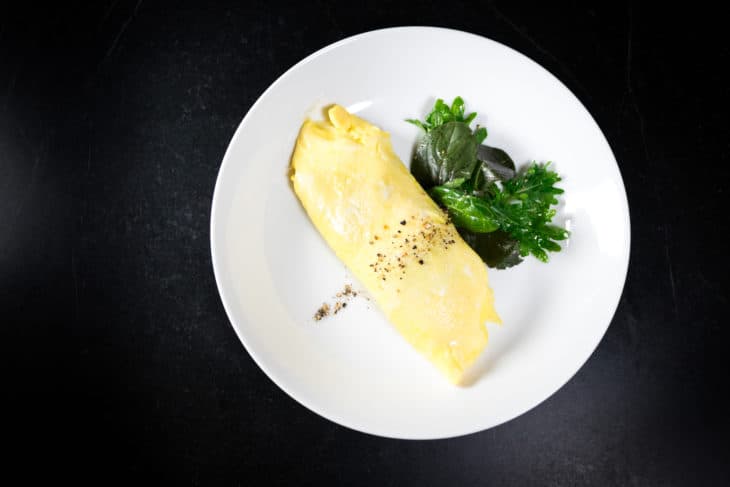
Sometimes I want something quick, simple and satisfying for dinner and there is nothing better for that than the egg. I do have to admit that I’m a bit obsessed with eggs. It’s the perfect little package filled with promise and possibility, protein and fat, ready to be transformed however you see fit. It can be breakfast, dessert, appetizer or one of my favorite, fast go-to dinners; the omelette.
I like to make them the “classic” French way. No browning. Still slightly runny inside. It’s the perfect blank canvas to fill with whatever you like and we typically fill it with whatever we have in the fridge. In this case it was some spring onions, goat cheese and thyme. Like most things, I recommend you keep it simple with just a few select fillings, if any at all, and keep the flavors focused, the egg is the star here, the other stuff is just there for enhancement. Don’t challenge the ego of the egg.


It's the perfect little package filled with promise and possibility, protein and fat, ready to be transformed however you see fit.


What Is a French Omelette?
A French omelette is delicate and gently cooked. American diner-style omelettes are fluffy, browned, and usually stuffed to the brim, the French-style omelette is tender, pale yellow, creamy inside, and just barely set. It’s cooked quickly over medium heat, constantly moved in the pan to create small curds, and no browning. It gets nicely rolled over onto itself and topped with a little melted butter to finish.


Ingredients you need
- 2–3 eggs (room temperature)
- 1 spring onion, sliced thin
- A few sprigs of fresh thyme
- A generous spoonful of Boursin or other soft herby cheese
- Butter or olive oil
- Salt and pepper, to taste
About The Fillings: Keep It Simple
Here, I’m using:
- Spring onions gently sautéed until soft and just sweet
- Fresh thyme, stirred in at the end
- Boursin, a soft and herby cheese that melts beautifully into the warm egg
Other great options:
- Chives and crème fraîche
- Mushrooms and gruyère
- A little smoked salmon and dill
Use whatever you have, and whatever you like!

How to Make a Classic French Omelette with Boursin, Onions and Herbs
For the filling (prep this first):
- In a small pan, melt a bit of butter and gently sauté the spring onion over medium-low heat until soft and fragrant—but not browned. Stir in thyme leaves, season with salt and pepper, and set aside.
For the omelette:
- Crack your eggs into a bowl. Add a small splash of water and beat until totally smooth—no visible yolk or white separation.
- Heat a nonstick or well-seasoned pan over medium heat. Add a generous knob of butter or drizzle of olive oil.
- Pour in the eggs and immediately start shaking the pan back and forth while using a spatula to pull the just-set edges into the center. Let the runny parts flow outward to cook.
- Keep the motion going until the bottom is just set but the top is still slightly glossy and soft.
- Turn off the heat. Spoon your filling into the center (or just off-center), and then gently roll or fold the omelette over itself using a spatula while tilting the pan toward your plate.
- Slide it onto your plate. Optional: brush the top with a little extra melted butter and finish with a pinch of flaky salt.
- Eat up!
Tips for the Perfect French Omelette
- Use a nonstick pan. Or a well-seasoned carbon steel pan. You don’t wanna have to worry about your eggs sticking.
- Don’t overthink the flip. If you put it on the plate and its not perfect, use the back of two forks, or just use your hands, and get it back in shape. No need to worry about perfection here.
- Leave it slightly underdone. That soft, creamy center is the whole point. Plus, it’ll keep cooking a bit once you remove it from the pan.

Frequently Asked Questions
Can I make a French omelette without a nonstick pan?
Yes, but it’s trickier. A carbon steel or stainless steel pan both work—just make sure they’re pre-heated and you use enough oil or butter, or both.
Can I use milk or cream instead of water?
You can, but water gives a lighter texture to the omelette. Cream can make it too heavy.
What’s the difference between a French and American omelette?
French omelettes are pale, soft, and barely set—rolled into a cylinder or oval. American ones are browned, firmer, and often stuffed with fillings.
Can I make this ahead of time?
No. You want to eat it immediately. But you can prep your fillings in advance to make the process faster and set yourself up for success.
More Recipes to Try
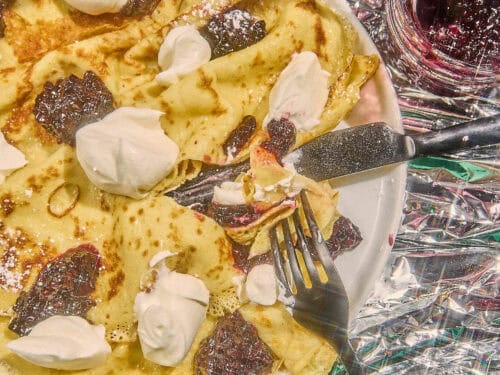
French Crêpes – Sweet French crêpes with whipped cream and homemade blackberry jam.
Fried Egg Breakfast Tacos – These quick and easy fried egg breakfast tacos are wrapped in a crunchy fried tortilla, homemade refried beans, and quick pickled onions. Great for breakfast, lunch, or dinner.
Eggs Benedict with Smoked Salmon & Hollandaise – A recipe for eggs Benedict with smoked salmon, creamy homemade hollandaise, and perfectly poached eggs.
Caramelized Banana Dutch Baby – This caramelized banana Dutch baby recipe is the perfect sweet treat for breakfast or dessert.
Dutch Baby Pancakes – A simple Dutch baby recipe that can be both sweet or savory, plus three of my favorite Dutch baby toppings.
Easy Breakfast Tacos – Easy 15-minute breakfast tacos with onion salsa and fried pumpkin seeds. This recipe is perfect for breakfast, lunch, or dinner.
Easy Fluffy Pancakes – This easy pancake recipe makes the fluffiest pancakes with crispy edges. The secret ingredient? Sour cream! Plus, the best strawberry sauce recipe to go with.
Did you try this French Omelette recipe?
Leave a rating and comment below—or tag @TheMostHungry on Instagram. I can’t wait to see it!

Classic French Omelette with Boursin
Ingredients
- 3 eggs at room temperature
- 1 spring onion sliced thin
- fresh thyme
- 2 tbsp Boursin or other soft herby cheese
- 1 tbsp Butter or olive oil
- Salt to taste
- Pepper fresh ground
Instructions
For the filling (prep this first):
- In a small pan, melt a bit of butter and gently sauté the spring onion over medium-low heat until soft and fragrant—but not browned. Stir in thyme leaves, season with salt and pepper, and set aside.
For the omelette:
- Crack your eggs into a bowl. Add a small splash of water and beat until totally smooth—no visible yolk or white separation.
- Heat a nonstick or well-seasoned pan over medium heat. Add a generous knob of butter or drizzle of olive oil.
- Pour in the eggs and immediately start shaking the pan back and forth while using a spatula to pull the just-set edges into the center. Let the runny parts flow outward to cook.
- Keep the motion going until the bottom is just set but the top is still slightly glossy and soft.
- Turn off the heat. Spoon your filling into the center (or just off-center), and then gently roll or fold the omelette over itself using a spatula while tilting the pan toward your plate.
- Slide it onto your plate. Optional: brush the top with a little extra melted butter and finish with a pinch of flaky salt.
Did You Make This Recipe?
Leave a comment with your thoughts or share your version on Instagram by tagging @TheMostHungry. I’d love to see how you made it your own!

Want more recipes like this delivered right to your inbox?
Sign-up to the Substack newsletter below:
Subscribe
Hi, I'm Rachel — the cook, photographer, and recipe developer behind Most Hungry.
This is my go-to spot for bold, approachable recipes rooted in Italian and Italian-American cooking, from hand-rolled fresh pasta to fall-off-the-bone ribs. Great food should be fun, doable, and absolutely delicious. Learn more about me →
Related Posts


Omelettes
with spring onion, goat cheese and thyme
- Eggs (2-3 per omelette)
- Spring Onion
- Goat Cheese – However much you want
- Thyme
- Butter or Olive Oil
- S&P
For the Filling – Do this first before you even crack an egg.
Gently sauté the onion in some butter till soft and slightly sweet but not quite browned or caramelized. Then finish it off with some fresh thyme and check for seasoning.
For the The Omelette
Get a pan on medium heat, preferably non-stick, and add in a good bit of butter or olive oil, really whatever fat you like. Make sure you use room temp eggs and beat them with a dash of water. You want a completely homogenous mixture here. And, try not to beat in a ton of air either, unless you’re into that sort of thing. I’m not. Next, drop your eggs in the pan and alternatively shake that pan over the flame and pull in the edges that are just set to the middle of the pan, allowing the runny bits to ooze out and set on the outer edges of the pan. Then shake some more. You’re aiming for a small small curd and creamy texture, so try and keep the pan moving. Once it looks about half set you should probably turn the heat off. The beauty of the omelet is in the gently cooked and just barely set, slightly runny interior. So, aim for undercooking the egg rather than over cooking it to where it gets brown and rubbery. Even if you think it looks too undercooked, just trust in the egg and that by the time you fill it and plate it, there is enough residual heat to cook the remaining bit to the perfect consistency. Now you’re ready to fill it. Add whatever you like, if anything at all, and then plate it up. I like to plate mine with a nice roll to it, but it really doesn’t need to be perfectly plated. It can rip and have holes, it’ll still taste good. But if you’re going for the roll, take a small spatula and while tilting the pan towards your plate and gliding it, gently, coax the top edge so it falls over on itself. And then do that a few more times till it looks like how an omelet generally looks. Put it on your plate and eat up!




One thought on Classic French Omelette with Boursin
Another great recipe. Eggs are just delish.