A few years ago, I got a gas-fired pizza oven specifically to make Neapolitan-style pizzas. And since I made my first one, I’ve been hooked. It’s taken a while to nail down my dough recipe (though it’s always evolving), but also to get the technical stuff right, like stretching the dough, topping it, and baking it without burning. It’s definitely been a learning curve, but the payoff is pizza, so no complaints here!
This is my current recipe for a classic Neapolitan-style Pizza Marinara — simple, perfect, and delicious. It starts with my favorite (and easy!) three-day cold-fermented dough, a bright tomato sauce, and a few key tips to help you get the best results. You can totally use this recipe as is, or as a base to build on and go wild with toppings.

It’s taken a while to nail down my dough recipe (though it’s always evolving), but also to get the technical stuff right, like stretching the dough, topping it, and baking it without burning. It’s definitely been a learning curve, but the payoff is pizza, so no complaints here!

What Is Pizza Marinara?
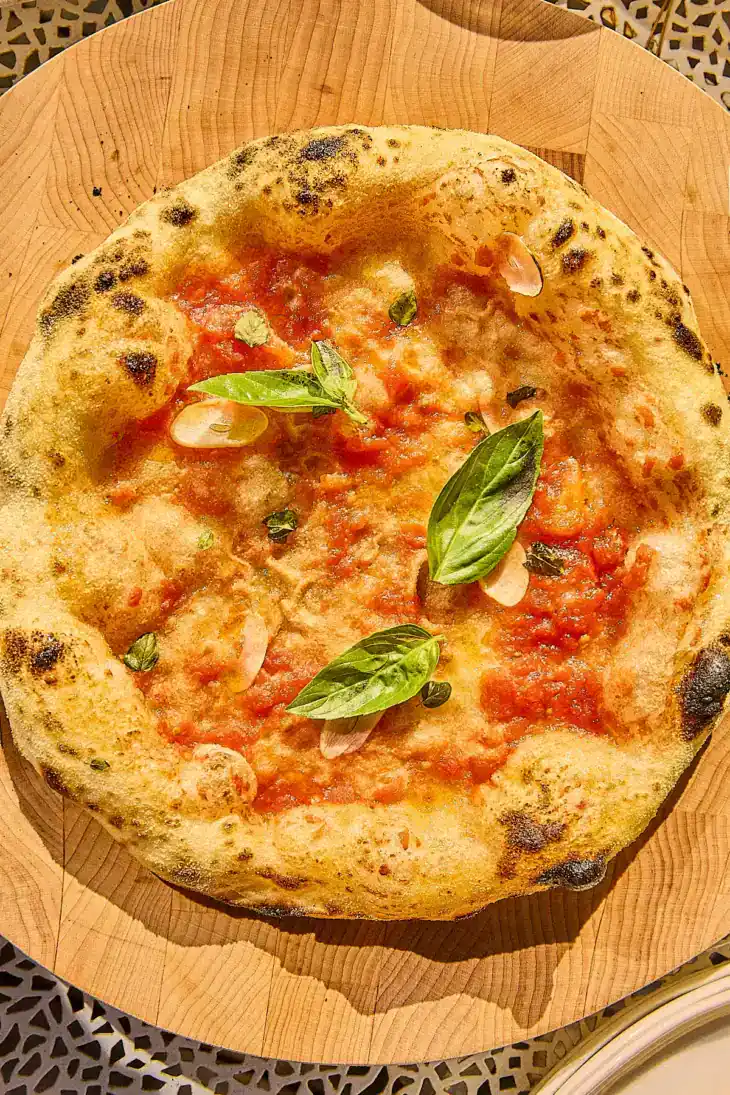
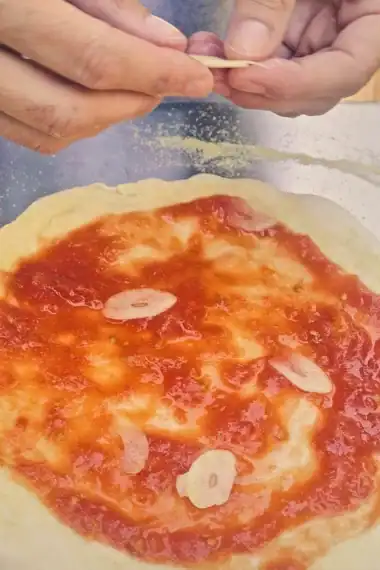
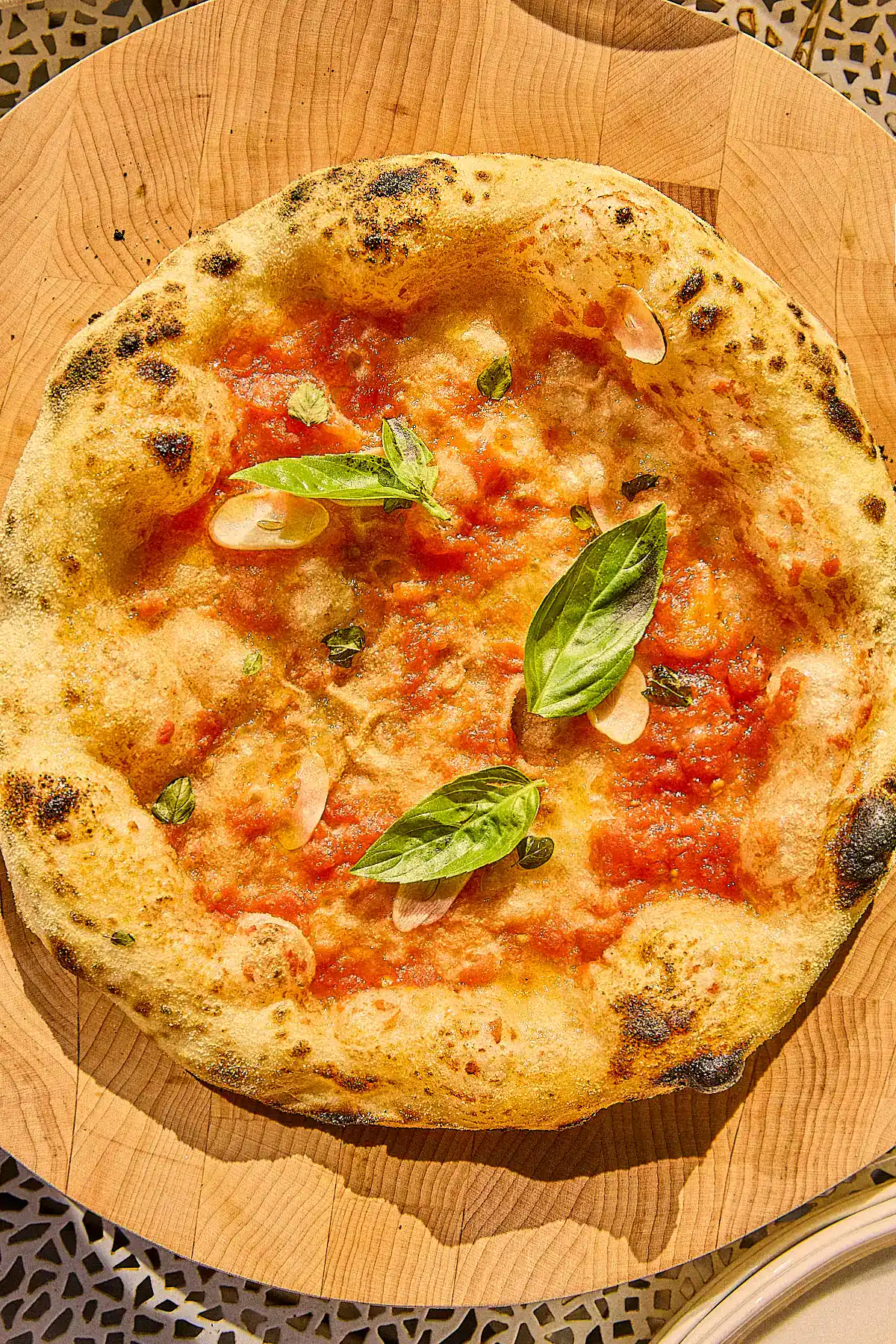
Pizza Marinara is classic, simple and one of the most traditional types of Neapolitan pizza, the other being Pizza Margherita. Marinara pizza is topped with tomatoes, garlic, oregano, olive oil, and sometimes basil. It’s incredibly delicious and when done right, is the ultimate pizza in my opinion.
The Cold-Fermented Dough
The key to a great Neapolitan pizza is undoubtledly the dough. This recipe uses a three-day cold ferment, which is not at all traditional, but it gives you a good balance of flavor without being too fussy to make. It takes a while, but requires minimal effort. The final baked dough has a crisp outer crust and a soft, airy interior.
The key is the cold fermentation. It slows down the yeast, allowing time for some more complex flavor development without any overpowering sourness. So, you get a dough that stretches beautifully, has a great texture, bakes evenly, and tastes very good.


Ingredients You’ll Need
The Dough
Makes 6 x 200g dough balls – good for 10” pizzas
- 700g 00 flour
- .5 g active dry yeast (~.08%)
- 476 g water (68% the weight of your flour)
- 21g salt (3%) – You can use more of less depending on your preference, but 3% is a great place to start.
The Sauce
- Canned whole tomatoes – Get a really good quality canned tomato here, it makes a big difference.
- Salt – A fat pinch. Taste your tomatoes and salt them generously. This sauce is kinda the main ingredient (besides the dough) so make sure it tastes good and is well seasoned!
The Toppings
- Garlic – Fresh and thinly sliced right before adding to the pizza.
- Oregano – Fresh or dried. I had fresh available so I used that.
- Fresh basil
- Olive oil
What Flour to Use for Neapolitan-style Pizza
For a classic Neapolitan-style crust, 00 flour is essential. It’s super finely milled, so it get’s a super silky texture and it absorbs water more easily than all-purpose flour. If all you have is AP flour, use that. But I highly suggest getting some 00 flour, specifically for making pizza. You will absolutely notice a difference.
Some brands I like are Caputo ’00’ Pizzeria Flour and King Arthur’s ’00’ Pizza Flour.
What Tomatoes to Use
The sauce on this Pizza Marinara is made with tomatoes and salt. That’s it. You want to look for whole canned tomatoes, ideally San Marzano or another equally high-quality tomato. I have raved on this site before about Bianco di Napoli tomatoes. They are my favorite, if you can get those, use them!
To make the sauce, you want to crush the tomatoes by hand or pass them through a food mill if you want a smoother consistency. I would not reccomend blending the tomatoes for this. They tend to get too watery, and the quick bake on the pizza (60-90 seconds) doesn’t cook off enough of the liquid, so you get a wet pizza with watery sauce. Not ideal.

How To Make Neapolitan-style Pizza Marinara
Make Your Dough
- Combine the flour, yeast, salt and water in a large bowl. Mix until everything is hydrated and comes together.
- Knead your dough for 5–10 minutes, until the dough is smooth, fully combined and it starts to get some elasticty. It should hold together and show some gluten development.
- First Fold: Fold the dough over onto itself a few times, rotating as you go to form a tight, smooth bundle. Place the dough in a large bowl or storage container, cover tightly with plastic wrap or a lid, and let rest at room temperature for 1 hour.
- Second Fold: After 1 hour, fold the dough over itself again, rotating as you go. Cover and transfer to the refrigerator to slowly ferment. Also, be sure to seal the container, you don’t want the dough to dry out or form a skin. Use a tight fitting lid or make sure the plastic wrap is fully sealed.
The 3 Day Cold Ferment
- Day 1: Fold the dough twice throughout the day, once in the morning and again in the evening, or whenever you have a chance. Keep it tightly covered to prevent it from drying out.
- Day 2: Repeat the same process. Two folds throughout the day. Keep covered and refrigerated.
- Day 3 (Bake Day, Baby!): Remove your dough from the fridge. Weigh out individual portions (about 200g each, or whatever size you like). Ball the dough by folding it over on itself to create a nice smooth surface. Pinch the bottom together to seal it and place it on a tray or in a dough box. Cover and let rest at room temperature for a minimum of 2 hours before baking, but you can leave it out longer. If you’re baking much later in the day, you can refrigerate the dough balls after shaping — make sure to let them come to room temperature and proof for at least 2 hours before baking.
Make The Sauce
- Crush the canned tomatoes by hand or run them through a food mill. Season generously with salt to taste.
Bake & Top
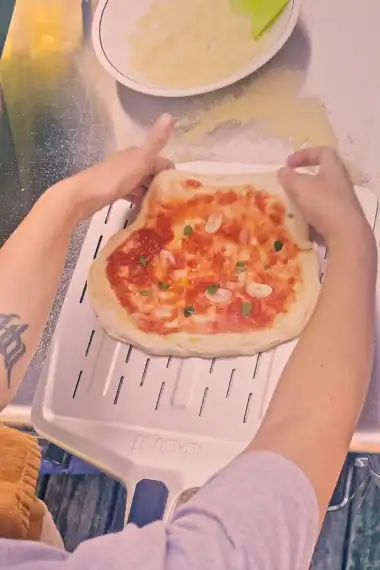
- When you’re ready to bake, grab a dough ball and keep track of the top side, this will be the top side of the pizza when baked. Generously flour each side and flip the ball so the top side is down and gently press the ball out from the center to remove the air and create your crust edge. Flip the dough back over, so you have the top side up, and stretch your pizza into roughly an 8-9 inch round.
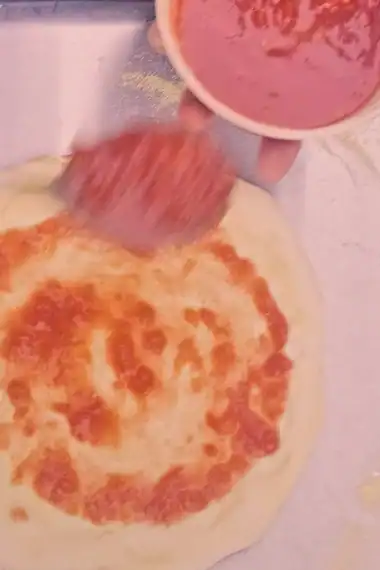
- Top the pizza with your sauce, fresh sliced garlic, oregano and olive oil. Make sure to get a little oil on the garlic. Lay the pizza on your pizza peel and stretch to the full 10 inch round.
- Cook in a very hot pizza oven — ideally around 750-850°F (400-450°C) — for 60–90 seconds. Let the pizza cook undisturbed for the first 30 seconds, allowing the bottom to set, and then turn frequently until the crust is puffy, blistered and slightly charred.
- Finish with an extra drizzle of olive oil and some fresh basil.
Special Equipment
Neapolitan pizza does require some specific tools and equipment for success. There really isn’t any way around it.
- Pizza oven: I use an Ooni gas-fired pizza oven, which reaches up to 950°F (500°C) for that quick, leopard-spotted bake. Gozney also makes some great pizza ovens. But, you will need a dedicated pizza oven to make this style of pizza. You need the high heat, flames going over the top of the pizza and a base that can hold a high temp.
- Pizza peel: For launching and turning your pizzas smoothly.
- Kitchen scale: You should already have one! They make cooking and baking so much easier and way more accurate. No need to guess if you measured correctly. Just get one.
- Infrared Thermometer: You’ll need to check the temp of the oven’s base before baking and launching your pizza. An infrared thermometer will give you an instant and accurate reading.
FAQs
What’s the best hydration for Neapolitan pizza dough?
I’ve done anywhere from 60% to 75% and I find that 68% percent is the sweet spot for texture without being too difficult to handle and stretch.
Hydration refers to the ratio of water to flour in your dough. A 68% hydration dough means that for every 100g of flour, you’re adding 68g of water. A higher hydration level creates a lighter, airier crust — but as you go up in hydration the dough can get quite a bit more difficult to handle.
How long can I keep this dough in the fridge?
Up to 3 days for the best flavor and structure. Once you go longer than that, the dough starts to get a little too sour and looses some of it’s strength. You can certainly use it, just know it’s not at its peak.
Can I make Pizza Marinara in a home oven?
You could, but it won’t be the same. It will still be absolutely delish, but you wont get the same charred and spotted crust with that crunchy exterior and light airy interior. If you wanted to try and make this in a home oven you want to get it preheated to 500°F, or as hot as it will go. Make sure to heat a baking stone or steel in the oven as well. The pizza will probably take anywhere from 8 – 12 minutes to cook. Keep an eye on it. You want the crust to be golden brown, and the bottom of the pizza to get crisp.
I have quite a few other pizza recipes that are better suited for home ovens as well as a sheet pan pizza dough recipe to use. These pizzas are developed to be made in a home oven and are very delicous if I do say so myself.
More Pizza Recipes to Try
Philly Tomato Pie – Learn how to make the ultimate Philly tomato pie — a Sicilian-style pizza topped with a rich tomato sauce, dried oregano, and grated cheese. An Italian-American classic perfect for gatherings and holiday parties!
Focaccia col Formaggio (di Recco) – Focaccia col formaggio — also known as focaccia di Recco — is a crisp, cheese-filled flatbread from Liguria made without yeast. This easy version uses grocery-store cheeses for an incredibly delicious twist on an Italian classic.
Pizza Fritta (Fried Pizza) – Small individual fried pizzas topped with mortadella, stracciatella, pistachios, and basil. A great snack or appetizer that is incredibly delicious.
Radio Bakery’s Sausage and Chive Focaccia – Make the viral sausage and chive focaccia from Radio Bakery at home! This focaccia has a soft, airy crust topped with Italian sausage, bacon, crème fraîche, and fresh chives.
Potato Pizza with Rosemary and Guanciale – Roman-style pizza con patate, a sheet pan pizza topped with thinly sliced potatoes, fresh rosemary, and guanciale.
Pizza Bianca (Roman White Pizza) – This Roman-style pizza bianca is golden, crispy, and perfect for sandwiches with pistachio pesto, burrata, and mortadella. It is so good!
Artichoke Pizza – Easy homemade Sicilian-style pan pizza recipe with marinated artichokes, fresh mozzarella, ricotta, prosciutto, and Pecorino Romano.
Pepperoncini Pan Pizza – Pepperoncini sheet pan pizza is a spicy, crunchy, and craveable grandma pie. Topped with melty mozzarella, salami, leeks, and tangy pepperoncini — this pan pizza is a weeknight favorite.
Pepperoni Pan Pizza – A no-knead, pillowy sheet pan pizza that’s low-maintenance and high reward. Baked in a quarter sheet pan with crispy edges, bubbly cheese, and lots of pepperoni.
Did you try this Pizza Marinara recipe?
Leave a rating and comment below—or tag @TheMostHungry on Instagram. I can’t wait to see it!

Pizza Marinara
Equipment
- Pizza Oven - You will need a dedicated pizza oven to make this style of pizza. You need the high heat, flames going over the top of the pizza and a base that can hold a high temp.
- Digital scale - A digital scale makes cooking and baking so much easier and way more accurate. No need to guess if you measured correctly. Just get one.
- Infrared Thermometer - You’ll need to check the temp of the oven’s base before baking and launching your pizza. An infrared thermometer will give you an instant and accurate reading.
- Pizza Peel - Very necessary to get your pizza in and out of the oven.
Ingredients
The Dough
- 700 g 00 flour
- .5 g active dry yeast ~.08%
- 476 g water 68% the weight of your flour
- 21 g salt 3% – You can use more of less depending on your preference, but 3% is a great place to start.
The Sauce
- 28 oz canned whole tomatoes Get a really good quality canned tomato here it makes a big difference.
- salt A fat pinch. Taste your tomatoes and salt them generously. This sauce is kinda the main ingredient besides the dough so make sure it tastes good and is well seasoned!
The Topping
- Garlic Fresh and thinly sliced right before adding to pizza.
- Oregano Fresh or dried. I had fresh available so I used that.
- Fresh Basil
- Olive Oil
Instructions
Make Your Dough
- Combine the flour, yeast, salt and water in a large bowl. Mix until everything is hydrated and comes together.
- Knead your dough for 5–10 minutes, until the dough is smooth, fully combined and it starts to get some elasticty. It should hold together and show some gluten development.
- Fold the dough over onto itself a few times, rotating as you go to form a tight, smooth bundle. Place the dough in a large bowl or storage container, cover tightly with plastic wrap or a lid, and let rest at room temperature for 1 hour.
- After 1 hour, fold the dough over itself again, rotating as you go. Cover and transfer to the refrigerator to slowly ferment. Also, be sure to seal the container, you don’t want the dough to dry out or form a skin. Use a tight fitting lid or make sure the plastic wrap is fully sealed.
The 3 Day Cold Ferment
- Day 1: Fold the dough twice throughout the day, once in the morning and again in the evening, or whenever you have a chance. Keep it tightly covered to prevent it from drying out.
- Day 2: Repeat the same process. Two folds throughout the day. Keep covered and refrigerated.
- Day 3 (Bake Day, Baby!): Remove your dough from the fridge. Weigh out individual portions (about 200g each, or whatever size you like). Ball the dough by folding it over on itself to create a nice smooth surface. Pinch the bottom together to seal it and place it on a tray or in a dough box. Cover and let rest at room temperature for a minimum of 2 hours before baking, but you can leave it out longer. If you’re baking much later in the day, you can refrigerate the dough balls after shaping — make sure to let them come to room temperature and proof for at least 2 hours before baking.
Make The Sauce
- Crush the canned tomatoes by hand or run them through a food mill. Season generously with salt to taste.
Bake & Top
- When you’re ready to bake, grab a dough ball and keep track of the top side, this will be the top side of the pizza when baked. Generously flour each side and flip the ball so the top side is down and gently press the ball out from the center to remove the air and create your crust edge. Flip the dough back over, so you have the top side up, and stretch your pizza into roughly an 8-9 inch round.
- Top the pizza with your sauce, fresh sliced garlic, oregano and olive oil. Make sure to get a little oil on the garlic. Lay the pizza on your pizza peel and stretch to the full 10 inch round.
- Cook in a very hot pizza oven — ideally around 750-850°F (400-450°C) — for 60–90 seconds. Let the pizza cook undisturbed for about 30 seconds, for the bottom to set, and then turn frequently until the crust is puffy, blistered and slightly charred.
- Finish with an extra drizzle of olive oil and some fresh basil.
Notes
Did You Make This Recipe?
Leave a comment with your thoughts or share your version on Instagram by tagging @TheMostHungry. I’d love to see how you made it your own!

Want more recipes like this delivered right to your inbox?
Sign-up to the Substack newsletter below:
Subscribe
Hi, I'm Rachel — the cook, photographer, and recipe developer behind Most Hungry.
This is my go-to spot for bold, approachable recipes rooted in Italian and Italian-American cooking, from hand-rolled fresh pasta to fall-off-the-bone ribs. Great food should be fun, doable, and absolutely delicious. Learn more about me →